Chitika Ad

Sunday, January 2, 2011

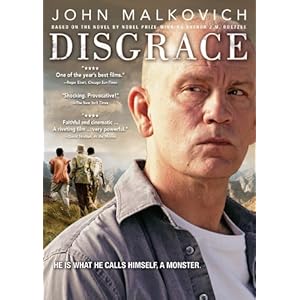
A Little-Late Film Review: Disgrace


Disgrace (2008) Fortissimo Films; Photo: http://www.amazon.com
Disgrace is a challenging movie adapted form J.M. Coetzee's novel about a college professor from Cape Town, South Africa named David (Malkovich) who is caught in an illicit affair with a student.  He is forced out of his position and he leaves the city to live with his daughter, his tail between his legs.  Shortly after David arrives he sees the effects of what is left of the feudal Apartheid era when his daughter is brutally raped by a disturbed young man and David himself is disfigured after being set on fire, an ordeal he and his daughter survive, but their relationship never recovers from.  The remainder of the film is a study of the after effects of this tragedy as David and his daughter attempt to come to terms. 

I liked this movie, though it does not have the appeal to reach the mass market.  It is an art film, and it has all of the characteristics of one.  The pale lighting, the soft-spoken dialogue, the violin music and the "artsy" nudity all bring this one into the realm of “film-snobs-only”.  The pretentious nature of the film knocks it down a few notches, despite having a very good story filled with interesting characters.  The disturbing plot is not pushed down our throats to the point of being uncomfortable, instead we are allowed to stand back and examine the flawed beings on screen, making something rarely done in cinema today ans most mainstream films just expect the audience to passively absorb the flashing lights and bright colors that flicker on their screen.

John Malkovich gives a subdued performance here.  His character seems like a broken man even before his and his daughter’s attack.  It is interesting when his anger kicks in because it seems so bombastic, and you can really see a temper under his soft-spoken demeanor.  As David is the focus of the character study, it is important for him to feel as though he has been alive all these years, not just long enough for the story to take place.  There are points in Malkovich’s performance where we see hints of his past that give life and depth to the character.

Disgrace is a good movie, but it is not for everyone.  This limited appeal comes mostly from the film's tone and presentation, which are not bad at all, but are born from a Sundance school of indie direction that would leave major audiences more than a little dumbfounded and maybe even a little bored.  However, for fans of deep drama and intense character studies, it is a good film.  It is not a great movie, but, unlike World’s Greatest Dad and the Bounty Hunter, I don’t regret watching it, in fact, I was a little impressed by how it did not bow to the common movie syndrome that we would see in a  mega-budget Hollywood film.


Saturday, January 1, 2011

A Little-Late Film Review: The Bounty Hunter


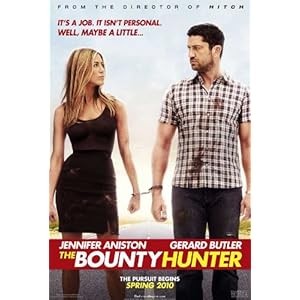
 2010 Columbia Pictures; Photo: http://www.amazon.com
I know this film by reputation. It is one of the worst-reviewed major releases of 2010 ranking with an astonishingly low 7% on the Tomatometer (www.rottentomatoes.com). I don’t know what got into me but I have been digging into the bottom of the Instant Streaming barrel of late, subjecting myself to one horrible piece of crap after another. So I chose to watch this one to see how terrible it could be. I watched as one character tells another character their own life story so that we can know what is going on. I sit and sit and sit and sit, listening to one line of lazily-written exposition after another. I paused the movie to grab a drink and looked at the time progress bar across the bottom of my screen and saw that I am only nine minutes in. I roll my eyes. “This is going to be a long one.“

The Bounty Hunter astonished me. I found myself cursing out the screen as uninteresting characters do unfunny things and always make the wrong decision for two hours. The plot (or as I like to call it: the excuse to have Jennifer Aniston and Gerard Butler argue incessantly for two hours) involves Milo (Butler) as an ex-cop-turned-bounty-hunter who learns (through a plot contrivance) that his ex-wife Nichole (Aniston) has a bounty out because she skipped out on a court hearing for a traffic violation. Milo finds Nichole almost instantly and he actually gives her a running head start. Of course he catches her after a stupid slapstick chase scene and this is actually where the movie gets worse. Time after time the inept Milo gives Nichole a chance to escape, if she does, he catches her, then she tries to escape again.

Nichole is trying to get in touch with a source regarding a covered-up murder as she is a reporter. When her source disappears, then suddenly reappears, the bad guys try to set Nichole up by having her source lead her into a trap. This goes bad of course and leads to another chase where she futily tries to escape her ex. This is the whole movie: Milo catches her, she escapes, Milo catches her, she escapes. In the end the two rekindle their love or some crap and all of this garbage concludes with one of the most predictable and unsatisfying endings the lazy, untalented writers of this monstrosity could have conceived.

The fundamental problem with The Bounty Hunter is listening to two people argue for two hours is not inherently funny. The film’s screenwriter Sarah Thorp (who also wrote Twisted, an even worse film that got a stunning 2% on the Tomatometer from rottentomates.com), seems to be incapable of writing funny and intelligent dialogue. The Bounty Hunter’s screenplay boils down to a series of dumb characters interacting with each other in the most uninteresting ways possible with some of the most poorly written dialogue I have ever heard in a major Hollywood release. I kid you not.


The acting doesn’t fare better. Gerard Butler and Jennifer Aniston are both pretty much consistently terrible and together they are deadly bad. Butler purses his lips, donning sunglasses, as he reads his lines with such disinterest that you’d think he was checking his Blackberry during filming. Aniston flips her hair around, makes airhead faces and spouts out one dumb line after another as though she were a sixth grader reading aloud for her class. When the actors aren’t speaking in a monotone they are screaming their way through the film. Most of the shouting and shrieking is reserved for a mustachioed Jason Sudeikis as Stewart, a co-worker of Nichole’s who is pining for her.

The Bounty Hunter is an example of what happens when untalented people are given free reign to a very bad plot. The director did do Hitch, a mediocre film that had enough charm to warrant a moderate recommendation, but this film is an example of how there is always room to fall. Despite the questionable skill of all involved it’s hard not to be astonished by how terrible this movie actually is. With the current state of the romantic comedy, it’s safe to say that this genre may be dead soon. There doesn’t seem to be any light at the end of the tunnel either as Hollywood continues to spew out more horrible trash upon an unsuspecting crowd of poor souls who should really check out a film’s credentials before paying money to see it. Fortunately, this film was widely ignored by audiences, it barely made back its big budget, which is far more than it deserves. This one should go straight to the top (or should I say bottom?) of the list for consideration for a Razzie. This is a royal piece of trash that should be ignored. Don’t be an idiot like me and subject yourself to this unquestionably inept, idiotic, unforgivingly horrible “movie.” If you absolutely must have a romantic comedy, check out (500) Days of Summer instead and do yourself a favor.


A Little-Late Film Review: Knucklehead


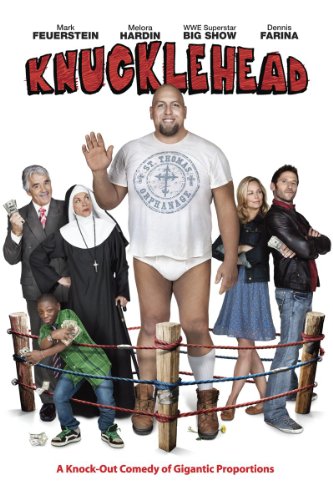
Knucklehead (2010, WWE Studios); Photo: http://www.amazon.com
So, when a movie opens with a logo that reads “WWE Studios” while playing flighty music reminiscent of a 90s comedy starring Chris Farley, it‘s bound to be bad.  The credits begin to roll and it’s actually downhill from there.  Knucklehead is a poorly-directed, unfunny, but ultimately harmless comedy starring WWE star Paul Wight (The Big Show) as Walter Krunk (ha ha, funny name…  Riiiiiight), a socially awkward giant who has spent his entire life cooped up in a Catholic orphanage.  When a gambling debt-ridden trainer named Eddie arrives and prays to God for help, Walter falls through the window into the chapel and Eddie gets a light bulb.  Eddie cons the mother superior into allowing him to take Walter across the country to fight for money to pay his debts and for a kitchen repair to save the orphanage… No, I’m not joking.  That is this film’s excuse for a plot.  Walter proceeds to reluctantly engage in one poorly directed fight scene after another in hopes of winning enough money for him to save his home and for Eddie to repay his debts to Dennis Farina. 

When the film as at its highest, it features the characters hitchhiking with a trucker hauling a trailer full of pigs and illegal immigrants (tasteful).  At its lowest it has nuns at the center of tasteless and unfunny fart jokes and Walter’s size resulting in one of the many, stupid pratfalls the film attempts to pass off as comedy.  Throw in more ethnic and social stereotypes, Walter engaging in a backyard wrestling event run by an enterprising eleven year old in a top hat, an ex-stripper who lives in a trailer park and Walter wrestling a live bear (which is actually a guy in a very crappy bear costume) and the result is an utter disaster of a comedy.

There are surprisingly few actual fight scenes in this film.  The ones that we do see are shot chaotically in a manner that does not show off any of the strength or skill of its star.  The camera pans around the fight close up in a way that makes it difficult to distinguish who or what you are looking at.  The camera will occasionally focus on Wight’s face as he mugs for the camera while he or his opponent is in some sort of submission hold.  If you are going to make a movie showcasing a fighter, wouldn’t it be to the film and the fighter’s advantage to showcase what the star is capable of?


Chaotic direction aside, the acting is just awful here.  Wight gives a performance that is almost as bad as any performance Shaquille O’Neil has inflicted upon an unsuspecting audience.  He mumbles, hangs his head humbly and holds his hands at his stomach as though he where an orphan asking for more porridge.  He is not able to carry a scene which leaves it up to TV stars Melora Hardin (The Office) and Mark Feuerstein (Royal Pains) to move each scene forward, which they manage to do, despite being held back by the utterly mediocre script.  The supporting cast, including the William Patton and the aforementioned Farina, are barely in the film, and only serve to either create the conflict needed to drive the protagonists or to establish a tie to anchor the characters to the plot that exists to give Walter an excuse to fight.

From start to finish, Knucklehead shoots for the lowest of the low.  Given the plot and studio behind the film, the bar is already pretty close to the ground, and this film barely cleared it.  I say barely because it is a better film than some of the horrible comedies that have hit theaters over the past few years (I direct you to my review of World’s Greatest Dad).  The movie is relatively harmless if you have young kids who are very, very into the WWE.  However, anyone over ten or twelve years old will have a hard time finding this entertaining, despite the PG-13 rating it strives for by inserting a few choice words.


Tuesday, December 28, 2010

A Little-Late Film Review: World's Greatest Dad

World's Greatest Dad.  2009 Magnolia Pictures. Photo: www.amazon.com

Robin Williams has been on somewhat of a losing streak for the last decade (with the exception of One Hour Photo he hasn’t been in a truly good movie since Good Will Hunting), with a laundry list of really bad comedies and a few inept dramas, he has proven to be one of the most consistently bad good-actors working today.  Williams has been good before, and he can be funny as well, the problem is he almost never plays the role to fit the tone of the movie.  He’s either overly hyper, to the point of insanity, or so melodramatic and down you’d think he just lost his dog.

Williams’ character in World’s Greatest Dad is an example of a performance without a character.  That meaning his role as Lance is so twisted between emotional states that it seems more like it was written for two different parts, and merged into one.   He approaches each scene as if the last one didn’t happen, despite the script attempting to tie the film together in a cohesive manner. 

World’s Greatest Dad’s despicable excuse for a plot involves a language arts teacher and aspiring writer who is struggling to pen a new story and to maintain a relationship with his estranged son,  Kyle.  Kyle hates everything, and says so.  The only thing on Kyle’s mind is sex, as he shamelessly and consistently reveals himself to be a complete pervert to his only friend Andrew and even directly to his father.  Lance is trying everything to reach out to his son, but nothing seems to be enough.  One night, his son is accidentally killed while trying to asphyxiate himself for his own arousal, something he has done before.  It is here where the movie goes from immature and boring to insanely hateful, and this is also the point where we lose all respect for Lance.  After a long drawn out montage where Lance is screaming in mourning next to his son’s corpse, he stages his room to make it look like Kyle committed suicide, and then proceeds to write a beautifully-penned note and plants it on the boy. 


Despite everyone at his high school hating Kyle when he was alive (mainly because he was an insufferable jerk to everyone), they all rally in mourning after the word of his apparent suicide gets out.  A student finds a copy of the note on the Internet and proceeds to share it to the student body and faculty, which includes Lance.  The note becomes so popular that students are lining up to join Lance’s class and are aspiring to write themselves.  Lance begins to enjoy the attention his son’s death as brought upon him.

He proceeds to write a journal and claims that it belonged to Kyle.  It quickly becomes a national hit, and even lands him a spot on a day time talk show.  It is here that Lance begins to realize that he is trying to capitalize on his son’s sudden death.  The film ends at an honors ceremony for Lance where he admits the truth about his son’s death.  The school is shocked and angry, so Lance runs into the school’s pool, strips and dives off the diving board.  He then appears to take Kyle’s friend Andrew under his wing.  The end.

I’ll keep this brief as the above paragraphs should reveal all you need to know about this movie.  The film is really just mediocre artistically, not good or bad.  The problem is the only two characters we really examine in depth are Lance and Kyle, and the screenplay makes it impossible to like either of them.  In the first act, Kyle is so hateful, so negative that it is impossible to make a connection to him, and you feel as distant from him as his father does.  Lance is such a buffoon and his actions after his son’s death are so despicable that it is impossible to find a point of connection to him as well.  So the audience is locked out of the story, never connecting to the characters on screen.  The movie tries to make up for this by inserting every single social stereotype from high school in the film, but this is a cheap stunt as none of these characters (with the exception of Kyle and Andrew) are even given more than a distinct face. 

There’s a rule to writing.  The reader/audience has to connect to the story or else they lose interest.  If you make all of the leads as vile as these, it is hard to find a point of association.  The film was written by former “funny”-man Bobcat Goldthwait, and you can see he tried, but there is no escape form Lance’s hateful actions and no voice of reason to balance them out.  I sat there with a look of disgust as this was one of the most hateful displays I’ve seen in a film.  Not in the same way that 2012 was, where it was people being killed by the millions for our entertainment, but instead we see a very realistic (albeit bizarre) death exploited by the father of the deceased for his own adulation and financial gain.  This movie is sickening.


A Little-Late Film Review: Depth Charge


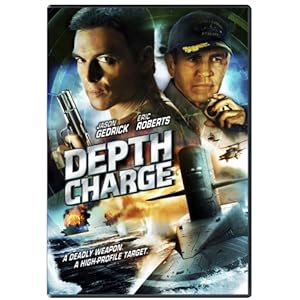
Depth Charge.  2008 RHI Productions.  Photo: Amazon.com

Depth Charge is an insanely stupid action thriller about an evil commander who takes over a US Naval sub with the threat of firing nuclear weapons if a one-billion-dollar ransom is not met.  Commander Krieg, played by Eric Roberts, is a cookie-cutter villain who is angry about being passed up for promotion time and again.  It is also noted that he is in debt (aren’t we all?) and is taking meds for a brain tumor that cause him to exhibit psychotic behavior.  It is up to a doctor named… well, Doc, and a young electrical officer named James Piersall to fight of an entire crew of generic terrorists and save the day. 


I tried to find something about this movie I liked but I really couldn’t.  This is an example of a film that should not have made it to release.  Though it was a straight-to-TV title that did not get a wide release, it is amazing that this film had an obviously bigger budget than a smaller film like Once, but remains a joke in comparison.  It is a shoddy movie filled with clichés and some of the silliest dialogue I have heard in a very, very long time.

To start, the hero is a mind-numbing bore.  Jason Gedrick’s performance is expressionless, emotionless, forgettable and just plain dull.  Seriously, this guy makes Steven Seagal look like freaking Laurence Olivier.  Every scene where he contacts the bad guys he opens with what just might be the silliest catchphrases of the year: “Get off my sub!”  That this is a blatant rip-off of Harrison Ford’s line from Air Force One is one thing, the fact that it is used three times is utterly unbearable.  It’s up to the screenplay (more on that in a moment) to guide the story along and provide the lines that keep the film entertaining, but when the best catchphrase you can come up with is “Get off my sub”, maybe you aren’t trying.  Judging by this performance alone, Gendrick appears to be an utterly amateur actor as he mumbles his lines and squints and grunts his way through the film.

The villain, Kreig, does not fare much better.  Eric Roberts has been around a long time, he even grabbed an Oscar nomination back in 1985, but today he is more or less a C-Grade star.  He isn’t a bad actor really, he just picks the most unfortunate screenplays.  He’s cashing a check here as he passively reads his villain lines that would have been dated in 1995, just filling in a reason to show violence on screen.  The biggest problem with Krieg is that his motives are only speculated on and are never really examined, which just makes this movie violence for violence’s sake.  For that matter, it is poorly done violence, with brings me to one of the most important part of an action movie, the action.


Each fight scene is extremely brief (about six to eight seconds at a time), uninteresting and chaotically filmed.  The shot is framed on the backs of the actors on  in the shot or off to the side while one actor is pinned off screen.  These scenes share similar cinematography with the popular amateur backyard wrestling videos you would find on YouTube.  The gunfights are similarly obscured by poor direction.  The camera still focusing on the backs and backs of the heads of the shooters or targets, obscuring what is going on further down in the shot.  Also, the stupidity of these scenes is just laughable, people can’t seem to hit each other when they are about four to six feet away. 

The film closes out with a very anticlimactic shootout, which goes back to the 6-8 second action scenes this movie is using, and all of the sudden this doctor who joined the Navy knows everything about driving a submarine and knows how to use all of its functions to stop a nuclear warhead.  Ok so the doctor is a turbo-fighting action star and knows how to drive a submarine?!?  Who the hell is this guy?!?  I believe we are supposed to be asking ourselves those questions but the movie never really explains why this guy is the Macguyver of the Navy.  This leaves Doc’s talents to be less plot-point and head towards the realm of convenient-plot-contrivance.

As I was watching Depth Charge (yes, I intentionally chose a 1-star recommendation) for this review, I thought “Well, it’s not that bad.  It is loaded with clichés and silly dialogue but I have definitely seen worse.”  Around the end of the second act, we are introduced to characters pretending to write on a touch-screen monitor with a stylus, when they’re really writing on a standard monitor (CRT for my fellow nerds out there) with a red colored pencil. At this point I found myself in awe of the ineptitude of this film.  For the most part, it’s the little things that trained movie fans would get while casual watchers wouldn’t (going back to the cinematography), but it’s also the choppy editing, which seems a little borrowed from Michael Bay, and the cheap props and absurd plot devices.  There’s also the poor sound mixing that has the music so loud that you actually cannot hear the actors at times, which is kind of a good thing because the dialogue is horrible.  All of these problems come together to form a laughably stupid, poorly filmed disaster that ranks among the worst made-for-TV movies ever released. 

Congratulations Depth Charge, you’re my first 0/5!!!


Monday, December 27, 2010

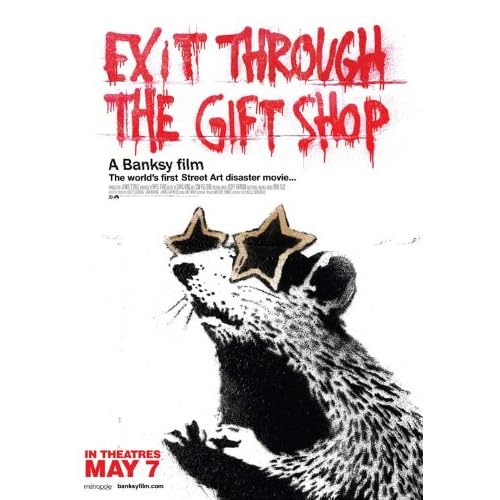
A Little-Late Film Review: Exit Through the Gift Shop


Exit Through the Gift Shop, 2010 Paranoid Pictures


Exit Through the Gift Shop is a fascinating documentary focusing on an compulsive videographer named Thierry Guetta who, after a traumatizing life event, began filming everything all of the time.  He turns his camera towards underground graffiti artists and begins to follow them around as they scale buildings, spray or paste their art, and even evade or confront the police.  We see him meet a few artists, one called Space Invader, as they leave their marks around their city.  The artists are interviewed with their faces obscured, fearing they may be identified by the authorities.

As his quest continues, Guetta hears of a legendary and very secretive artist named Banksy, who after being confronted by the eccentric cameraman is told is the subject of a documentary he wishes to make; a documentary that, at that time, did not exist.  This all seemed to be some sort of strange plan to get deeper inside the artist community as Guetta admits he himself is also an aspiring member, and through this we get to see something strange about Guetta.  Something just seems off.

As we begin to examine Guetta more deeply in the film we see some of his other recordings, some of friends and family, and one deeply disturbing shot of a room in his abode where there are literally hundreds of tapes stacked everywhere.  Guetta’s madness seems to be becoming the center of the film, not the artists, and as we soon find out, this is where Guetta’s deception of the artists becomes truth, as he admits he will be compiling the footage of the artists into a single film. 

As the story continues, Guetta and Banksy meet through connections after finding the artist is in the city and ultimately become friends.  Guetta avidly follows Banksy around, filming his process of creating the art in a studio apartment, blowing up the art at a copy shop to a much greater size, then stenciling or pasting it that night.  This part is truly interesting, as you see that this is not just a hobby for some graffitists, it is their job or even their life, as it consumes their day. 


One day, Guetta travels with Banksy to a Disney park where the artist decides to throw out some guerilla art in view of one of the rides as it passes by.  This intentionally controversial piece leads the park to stop the ride as it is being removed and alerts the authorities to the artist and the filmmaker.  Banksy gets away, but never receives a call from his ally.  Guetta is caught by park security and questioned, but is eventually released.  This is a shock to Guetta and leads him to settle things down a bit.  It is here that we get our last glimpse of the strange fantasy Guetta seems to be building in his head. 

Banksy begins to work with Thierra to become a street artist.  Guetta takes on the alias MBW, which strands for “Mr. Brainwash”, and begins to lay down some truly odd works resembling pop icons or common objects that are greatly distorted.  MBW becomes poplar, though many of the established artists are perplexed by this as they consider his art unimpressive.  Guetta then decides he will put together a massive exhibition, with an excessive number of works, and auction them to the public shoppers.  In the end the auction brings in just over one million dollars.

After the showing Banksy is back on the camera and he admits that his support for MBW might have been a mistake.  Other artists seem baffled by the success and admit that they are not particularly good or original.  It’s difficult to tell if this is natural jealousy, or if they feel as though they where used by a manipulative artist to get exposure.  We then learn that this film was never actually to be, but instead, the artists turn the cameras on Guetta to reveal his methods and his journey through their culture. 

Exit Through the Gift Shop takes a twist towards the bizarre and it is difficult to tell what the film’s attitude is towards any of the characters in particular.  It is completely impartial.  This is, in fact, a good thing as a documentary should generally show us how something is, not how it is interpreted to be.  The film is not without controversy, however, as some critics have claimed it to be a fabrication, though the film’s director, Banksy, defends its authenticity.  Is it too real?  Is it too strange to be real?  One thing is for sure, Exit Through the Gift Shop is one of the most engaging documentaries of the year.

Sunday, December 26, 2010

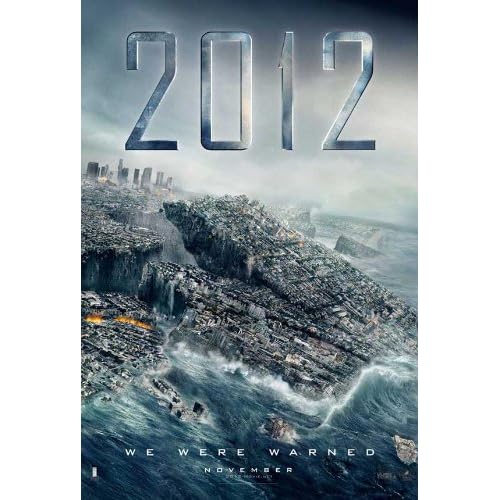
A Little-Late Film Review: 2012

2012, 2009 Columbia Pictures.  Photo Credit: www.amazon.com
One positive thing I can say about 2012 is that it isn’t anywhere near as bad as I had expected it to be.  That said, it is a disaster of a disaster movie.  First off, the special effects aren’t half as good as those from the Day After Tomorrow, and seeing as how they weren’t that good then, that says a lot.  Scenes that are meant to seem exciting are overdone, overlong and unintentionally funny at times with occasionally really bad CGI moments that are eye-rollingly bad.  This is all set to a poorly paced film where we are meant to watch in enjoyment as millions of people die horrible deaths.  Yay!  So it’s an entertaining movie!

Roland Emmerich has destroyed the world so many times, that he had to figure out a way to do it bigger and “better” than before.  In The Day After Tomorrow the Earth was destroyed by a devastating meteorological event, so to one-up this, he had to incorporate every possible geological disaster he could think of in a series of ridiculous scenes where the apparently sentient disasters seem to either target and follow our protagonists, or conveniently miss them repeatedly so they can escape.  The first two major scenes involve a massive earthquake that sinks southern California into the Pacific Ocean followed by an absurdly large volcanic eruption that if were real, would have produced a pyroclastic flow possibly hundreds miles in diameter that would have done massive damage to everything and everyone hit by it, but that wouldn’t have let the good guys narrowly escape (Both of the preceding occur in the first hour of this roughly two-hour and forty minute movie).  The eruption does, however, result in a massive cloud of toxic ash that is sweeping across the country which forces the plot to move forward. 

Okay, so what about the positives?  Well… the film has a good cast including John Cusack, Chiwetel Ejiofor, Thandie Newton and Olver Platt.  When they are actually in the story, some of their scenes are good.  The problem is the screenplay is irrelevant to this movie, and therefore how it is executed has little impact on the scenes.  The really good actors in the film like Platt and Ejiofor are rarely given screen time, and when they are they are spouting out the obligatory clichés that are so common in this genre.  The dialogue scenes are few and far between but when the characters aren’t fleeing the wrath of mother nature the dialogue is contrived and manipulative; a shallow attempt to give the characters the illusion of depth. 


This illusion is irrelevant however, as 2012 is a sadistic exercise.  We are meant to find scenes with buildings toppling and bodies falling from the sky exciting?  This is an action flick right?  Not a Greek tragedy?  I only ask because in scene after scene millions of fictional people are being wiped off the map so that we can focus our cheers on a small cast of characters because their representative actors on screen are near the top of the film’s IMDB page.  The willingness to care about these characters is made even more difficult by the fact that they all fit neatly into a series of convenient clichés.  Cusack’s Jackson is a distant workaholic father, now divorced, struggling to rebuild a relationship with his children (Emmerich used that one in the Day After Tomorrow too), the ex-wife who reestablishes a relationship with the protagonist (from Emmerich’s Godzilla), the crazy scientist guy (played by the likable Woody Harrleson, used in the Day After Tomorrow AND Independence Day AND Godzilla ) who nobody believes until it’s too late and the corrupt politician that willingly kept an important secret until it was too late to save anyone (Emmerich used that in Independence Day).

Aside from the clichés, contrivances and utter impossibilities this movie passes off as plot points, there is just this issue of pacing.  The film, despite being almost three hours long seems rushed and scenes are recycled.  Characters arrive at a destination and are chased by the disaster and the debris as they narrowly escape in a vehicle.  This pattern occurs multiple times in the film until the start of the third act where the main characters arrive at a series of ships that are scheduled to take the wealthy and influential to a safery so they can return to safely populate the world with the optimal gene pool.  Pretty offensive, but the offensiveness of the eugenic approach here is negated by how stupid it is.  Let’s analyze this.  So they do not have to train for the years that astronauts and cosmonauts do to prepare their bodies for the rigors of space flight because the ships are “special” or something?  Well, it turns out, despite all plot points saying otherwise that the ships are actually just that, ships.  Arks to be exact.  Cool.  So that was... explained.  What about the flaw where the ship is crashing through icebergs to get to safety.  Those big hunks of ice aren't made of Styrofoam.  This scene is just silly.

That flaw, however, is not the biggest problem I had with 2012.  The overlying problem is it is a “Big-Budget Blockbuster” produced to entertain with flashy special effects yet it is a hateful film, as we watch millions die over and over.  The film pretends to have a heart by showing some characters upset by the fact that people are dying and being left behind.  This is a weak cop out, however, because the movie doesn’t give a crap about any of the victims the CG lava, earthquakes and tidal waves have claimed.  We are expected to be in awe of the effects as we witness the death of families as the camera sickeningly lingers on their final huddle as a massive wave rushes in from the background.  This is not entertaining if you aren’t a psychopath and I try to think of myself rational, and able to suspend belief, but there is nothing entertaining about millions upon millions, ultimately billions of deaths, all for my entertainment.  Roland Emmerich has done this time and again, however never before have we been forced to stare named characters in the eyes as they meet a horrible fate, especially when those eyes belong to children.  On a production level, 2012 is not a bad movie, on an entertainment level it is an insufferable mistake that should be ignored if you haven’t already seen it.