Chitika Ad

Showing posts with label pop culture. Show all posts

Wednesday, April 6, 2016

My 75 Favorite Songs of the 80's - Part 1: 75-61


Foreward.
I had planned on writing a "favorites" list again and decided to start here. I will release this in parts of 15 over time. I apologize in advance if the embedded videos do not play in the article for you, but some of these videos (most of these videos), despite being from almost all legit channels, are blocked from being viewed outside of YouTube because of the site's Draconian policies. If you follow the link in the error message, it should open the video in a new tab for you.

I hope you enjoy...

75- “If You Leave” - Orchestral Manoeuvres In The Dark (1986)
Album: Architecture & Mortality & More
Writers: Martin Cooper (OMD and The Listening Pool), Paul Humphreys and Andy McCluskey


John Hughes was a voice of the 80’s and his movies touched millions.  So, naturally, a song
From the soundtrack of one of his hit movies would become a hit itself.  If You Leave is OMD’s
Most successful single in the US, due largely to its exposure in Hughes’ 1986 classic Pretty In Pink.  


While the whole of the song is filled with tonally-soft vocal melodies, what makes this song stand out is its striking synth riff that is its most recognizable feature.  It adds a bright sound that makes it fit more along with the pop acts of the early 80’s as opposed to the more dramatic, minor key sounds of its time.


74- “Wake Me Up Before You Go-Go” - Wham! (1984)
Album: Make It Big
Writer: George Michael


    Speaking of ‘bright and cheery’, next up is Wham!’s chart-topping hit Wake Me Up Before You Go-Go.  The song makes my list solely because of George Michael’s vocals.  His high notes mixed with the song’s tone lift this one up more than it would have otherwise been as this sort of bubbly, overly-cheerful pop music is usually a turn-off for me.  Still, I can’t help but smile when I hear this song.


73- “Turn It On Again” - Genesis (1980)
Album: Duke
Writers: Tony Banks, Phil Collins, Mike Rutherford


Genesis is one of the all-time essential bands.  They are among the most successful rock acts of all time, and were utterly ubiquitous in the 80’s.  As inescapable as they were and still are today, it’s easy to forget that it took former frontman Peter Gabriel’s departure, and drummer Phil Collins’ move to lead singer to really bring this band to the forefront of modern pop/rock, where they rest as one of the most successful acts in the genre’s history.  


Turn it On Again is one of the singles that defined Genesis’ distinct sound.  While they are widely known for songs such as In Too Deep and Invisible Touch, their B-Sides and unreleased tracks really expressed the range of the band’s musical complexity.  It is here that they really show off their upbeat, lyric-heavy style meshed with unconventional rhythm and time signatures.  It’s now a classic icon of their live shows, so much so that it became the official name the band’s reunion tour in 2007.  It’s one of a number of songs of theirs that were never given an official single release, but still carry on their legacy today, another will show up later in this list…


72- “Whip It” - Devo (1980)
Album: Freedom of Choice
Writers: Gerald Casale, Mark Mothersbaugh


In an effort to shake the negative stigma of late-70’s pop and disco, New Wave artists worked hard to distinguish themselves with a fresh style that removed them from the sound that tried to linger in the wake of the 70’s.  New Wave had been growing for a few years leading up to this point, but it was just starting to make waves in the very late 70’s.  During this time, a lot of bands flooded the scene with a very different sound.  Some were successful, many were not, but the novelty of the time drove the genre, which is why so many of the biggest hits were a little… odd.

Whip It featured all of the iconic elements of popular New Wave in its time while maintaining a certain level of integrity, lacking the over-the-top, attention grabbing evident in many of Devo’s contemporaries.  It featured the aggressive synth, the vocals lacking sustained notes, the short-but-sweet composition… All of the characteristics of New Wave at the time, but feels much more mature and mathematical than most of the hits it shared the charts with.


71- “There Is A Light That Never Goes Out” - The Smiths (1986)
Album: The Queen Is Dead
Writers: Johnny Marr, Morrissey


As the 80’s came around and mainstream New Wave dominated the scene, indie rock acts were making the rounds in the background.  The Smiths had a few things going for them early on.  They had crossover appeal, they were unique and they had a moody tone that really lifted their music up beyond being typical pop-rock.  This is where the Alternative subgenre comes into play.  


Alternative has a few definitions in industry terms, but what it typically boils down to is a general pool of artists who have some rock, blues and pop influences that aren’t “poppy” enough for the pop mainstream or “rockin’” enough for the rock charts.  This is reserved for your Collective Souls; your Counting Crows; basically, any group that sort of treads the lines of rock with many of songs, or at the very least, their singles.


The Smiths have this unique ability to draw you into the mind of songwriter and frontman Morrissey.  The deeply personal, tonally-odd lyrics of many of their better songs were a real contrast to the upbeat, saccharin, hot-pink pop of the period.  There Is A Light That Never Goes Out is told from a perspective of a person who feels isolated alone at home.  Implications are that other people there cause this feeling, but he feels freer with the one he’s with.  This feeling is so strong he would be satisfied with dying that night with the driver rather than staying at home.  It’s a powerful statement, and one that has turned this into one of the most beloved songs of its time.  


That said, it did not chart in the US.  It failed the test of NA popularity against other acts of the time, as the tastes in the UK rock scene clashed heavily from what was consumed Stateside.  Over the years, as more and more popular artists cited The Smiths as a strong influence, they garnered more attention and are now rightfully recognized as the titans of creativity they are so well known to be in their home country.


70- “I Ran” - A Flock of Seagulls (1982)
Album: A Flock of Seagulls
Writers: A Flock of Seagulls


Going from underground rock acts to the massive mainstream, we have “I Ran”, a song that hovered just inside the Billboard Hot 100’s Top Ten spot in 1982.  After its run on the charts as a hit MTV tune, it become a contender for one of the most definitive songs of the decade, and for good reason.


Comparing A Flock of Seagulls’ biggest North American hit to other songs of its day, it seems to fit right in.  It had the upbeat pace, the synth, the simple lyrics, the immediate-recognizable intro… all of it.  It was just the right single to land this act in the annals of pop history, and remains their biggest hit.  Aside from the success of the song, A Flock of Seagulls also exemplified the look of the 80’s.  Foregoing the pretty boy look of the 70’s, they become known for their outlandish hairstyles.  This was also increased as MTV made the look of the artist more accessible in the 80’s to anyone with cable.  


Their style of sound were mimicked for the better part of the decade after this hit landed them into stardom, but they would begin to peter out in the U.S. as music tastes began to evolve but continued with a string of successful hits throughout the 80’s internationally.  The band dissolved after the falling out of brothers and founding members Mike and Ali Score.


69- “Hold Me Now” - Thompson Twins (1984)
Writers: Tom Bailey (Thompson Twins), Alannah Currie and Joe Leeway
Album: Into the Gap


I find it hard to define specifically WHY I like Hold Me Now.  It’s repetitive, the chorus is slow, it’s way too long for what it is, yet for some reason the mix of melody and the interesting percussion make this one stand out.  It is Thompson Twins’ biggest-selling single and rests as one of the most well-known 80’s hits.


I don’t really know what more to say about this one.  It’s certainly a simple song that’s easy to sing along with.  This is a good thing for a pop song, which is designed to get stuck in your head and to be memorable.  No one pop song is ever released with the intention of becoming a timeless classic.  It just sort of happens.  Hence, that indefinable quality.  


68- “All I Need Is A Miracle” - Mike + The Mechanics (1985)
Writers: Mike Rutherford, Christopher Neil
Album: Mike + the Mechanics


In the 80’s, Genesis was unstoppable.  They would continue a string of hits through the years, but as the band grew in success, other acts were operating on the side.  This includes solo and collaborative performances from frontman Phil Collins, and guitarist Mike Rutherford starting his own band, Mike + the Mechanics.  


In the US, the band is mostly known for the single All I Need Is a Miracle, an upbeat and memorable pop tune.  It has a fair share of schmaltz slathered on top, but that does not detract from the fact that this is a legitimately-enjoyable tune.  It is certainly the sort of single that could only have become popular in the mid-80’s, but it still manages to capture elements of a greater sound that would become big in its time.


67- “Big Time” - Peter Gabriel (1986)
Album: So
Writers: Peter Gabriel


As Peter Gabriel’s 2nd hit single after his split from Genesis, Big Time helped to introduce his larger-than-life sound after his previous hit Sledgehammer.  It was a common theme of the 80’s to talk about rising up to success and making it “big”.  This was due to the mostly-up economy and the general attitude of flash and decadence of the period.  The song is one of the best of its kind, with a catchy, singable pop chorus and an awesome animated music video in the tradition of Sledgehammer.  


The song’s host album “So” is one of my favorite albums of the decade, and in terms of style, it’s also one of the most diverse.  I can promise you will see more from this album on the list in the future as it truly is one of the 80’s great music masterpieces.  If you have not heard it, I suggest giving it a full listen.


66- “Land of Confusion” - Genesis (1986)
Album: “Invisible Touch”
Writers: Mike Rutherford, Tony Banks, Phil Collins


Invisible Touch is an amazing album and Land of Confusion is one of its best singles.  The hard-hitting sound makes it stand out from the album.  The composition definitely has a lot of power to it, and the intensity of Collins’ vocals only helps to accentuate the tone of the lyrics.  This “The World Is Just So Messed Up” theme that so many hit songs of the era shared adds to the emotional tone of the song, and in an era saturated by bad “Save the World” songs, this one is a breath of fresh air.


Aside from the sheer quality of the song, the music video has stuck with people over the years.  The puppeteering is definitely creepy and bizarre.  The imagery is both funny and dark and it contrasts strangely with the tone of the song, but I think that works in its favor.  It gives it staying power.  


65- “Drive” - The Cars (1984)
Album: Heartbeat City
Writer: Ric Ocasek


The Cars are largely known for their driving, upbeat pop rock tunes, but Drive is actually their biggest overall hit.  As part of the excellent album Heartbeat City, it serves as a moody, melancholy break from an otherwise energetic tracklist.  The song is incredibly simple, smooth and it doesn’t build to much intensity, but the warmth of the lyrics are its strength.


Common opinion states the song is about a man who is speaking to a friend (likely a female) who is struggling or suffering from something in their life, and how he is reaching out to let him help.  It’s a plea for change and intervention.  Sung by bassist Ben Orr, the song has a much more serious tone than The Cars’ other singles of the 80’s.


64- “Burning Down the House” - Talking Heads (1983)
Album: Speaking In Tongues
Writers: David Byrne, Chris Frantz, Jerry Harrison, Tina Weymouth


One of my favorite artists of all time are Talking Heads.  They have such a great, unique sound and what I like most is how they are willing to experiment and try different musical ideas and styles.  Burning Down the House is the brainchild of drummer Chris Frantz and bassist Tina Weymouth, who were “jamming” after a Parliament-Funkadelic concert.  David Byrne then wrote the lyrics by spouting out random lines then picking the ones that “worked together”.


Of all of Talking Heads’ singles, Burning Down The House remains their most successful, peaking just inside the top 10 of the Billboard Hot 100 back in 1983.  It is easily among their most accessible songs.  There’s nothing too eclectic that would drive away more casual listeners, and the funk-inspired groove made it a popular dance tune.  It also performed well on the rock charts, granting Talking Heads even more underground credibility, which cemented the early 1980’s as the height of the band’s storied career.


63- “About A Girl” - Nirvana (1989)
Album: Bleach
Writer: Kurt Cobain


That’s right!  A Nirvana song on my 80’s music list!  I went there!  About A Girl is an odd little Beatles-inspired tune from the iconic band’s 1989 debut album “Bleach”.  The song was reportedly written by Cobain about his then-girlfriend.  It was a reflection of their complicated relationship.  Cobain kept the inspiration for About A Girl a secret that would not come to light until after his death.


About A Girl is a very simple song, using a verse-chorus structure that is very common in the grunge scene, with bands often simplifying their music; a staple of grunge’s rival genre: punk.  If you listen to most rock of the late-80’s, then listen to About A Girl, it is easy to see why Nirvana had so much promise in terms of guiding rock music into a new era.


62- “Don’t You Want Me” - The Human League (1981)
Album: Dare
Writers: Jo Callis, Philip Oakey, Philip Adrian Wright

Through the history of popular music, there are many examples of hit songs hated by their artists.  Don’t You Want Me is the most successful single from synth-pop act The Human League, who had three previously-popular singles leading up to this point.  The story of Don’t You Want Me involved frontman Philip Oakey and producer Martin Rushent butting heads over the song, which Oakey despised.  He felt it was too poppy and too far-removed from their known sound at the time, demanding it be relegated to a B-side and shoved at the end of the album.  Little did he know then that not only would it be successful, but it would become one of the biggest pop songs of the decade.


The song tells the story of a relationship as told from both the point-of-view of the male and the female.  The dynamic of the song is enhanced by this dual perspective and the two vocal styles work well together.  I think, even over this interesting songwriting idea being done well here, this is just a catchy, accessible song.  It’s stuck with me for years as a song that is distinctly 80’s, while also sounding a little ahead of its time for 1981.


61- “Love Bites” - Def Leppard (1988)
Album: Hysteria
Writers: Joe Elliott, Phil Collen, Steve Clark, Rick Savage, Robert John Lange


Def Leppard, one of the definitive rock acts of the 80’s, had only one number one single in the Billboard Hot 100.  That single was Love Bites.  “Hysteria” was a different direction from Def Leppard’s Pyromania, which had a harder edge to it.  Instead of grit, Def Leppard added emotional depth with their song writing and while they still have some of that desireable rock styling in the album (audible in tracks like Woman and Don’t Shoot Shotgun), “Hysteria” certainly feels like the band’s “grown up” album.

Love Bites definitely sounds like it comes from the perspective of a person who struggles with holding things together with his lover.  He feels the drive to maintain a physical relationship with a woman who is obviously cheating, but struggles with his own desire.  It’s a common trope in this sort of “cheating girl” ballads.  The song’s slower tempo allows it to build to a massive, harmonious chorus, with the background vocals picking up the intensity.  I feel Love Bites shows off the band’s vocal talents more than just about any of their other tracks.

Tuesday, April 14, 2015

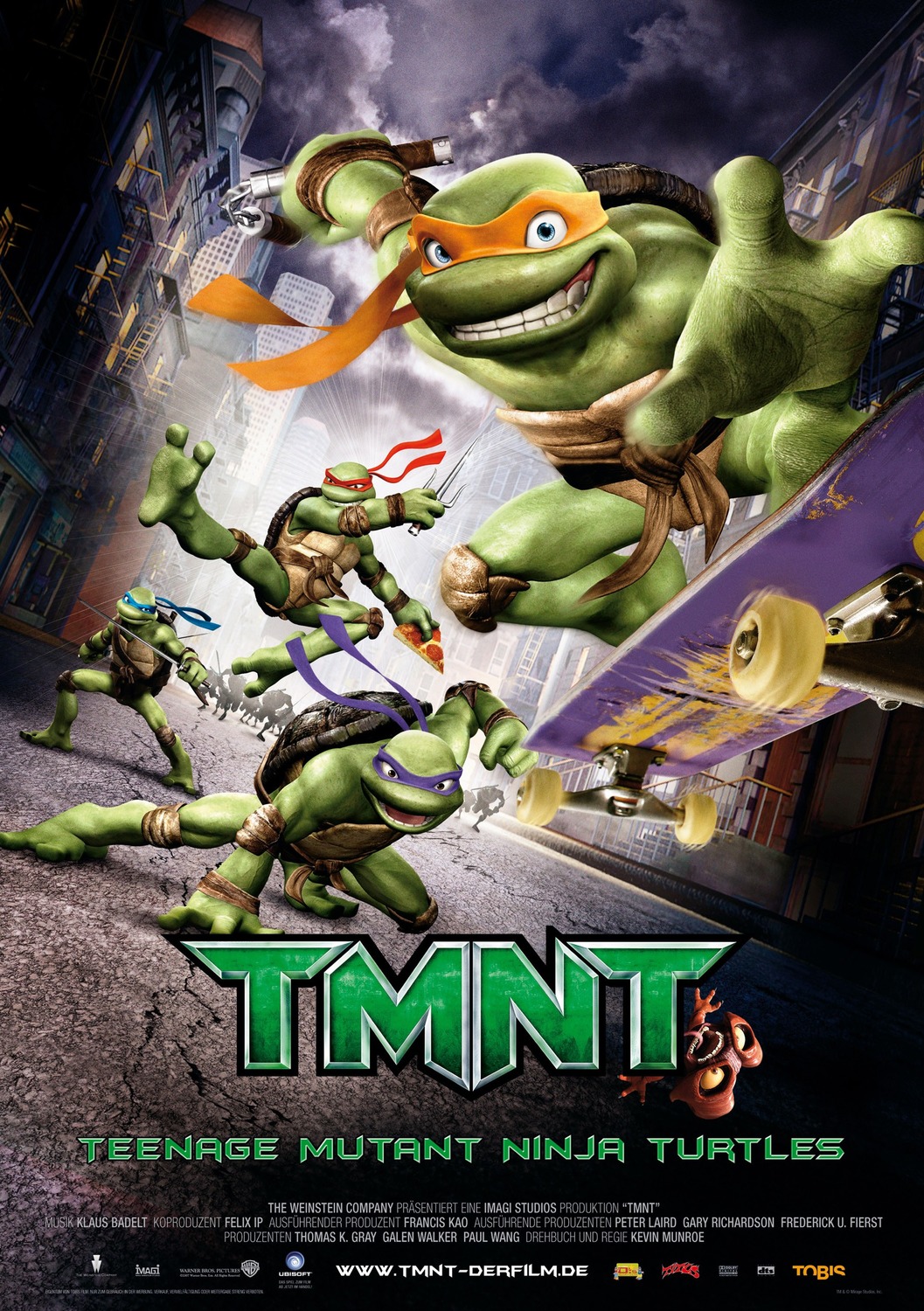
Generation Wars: Teenage Mutant Ninja Turtles (1990) vs. TMNT (2007)


Now, I know I’m not the first person to do this, but I would like to see how many of these classic series have evolved over the years and I decided to start this series with Teenage Mutant Ninja Turtles.  

Originally based on Mirage Comic’s violent cult series of the same name (created by the duo of Laird and Eastman), the Teenage Mutant Ninja Turtles made their mainstream debut in the late 80’s.  Now, it’s important to note that this was a time where a lot of major companies were seeing great success with animated series based on toy tie-ins.  The two biggest ones before TMNT were G.I. Joe and Transformers.  These two series drew huge fans to the stores to buy every toy for everything they saw on the 30 minute TV series.  The fact was, these shows really didn’t have much in terms of plot.  They were really just toy advertisements.  The same goes for a lot of hit series from the time, including The Real Ghostbusters and Thundercats.  Then came 1987…

‘87 was a bad, BAAAAD year for movies, but on TV, things were changing.  Some of the biggest shows ever made their debuts in this year.  Three notable entries were Star Trek: The Next Generation, Duck Tales and Teenage Mutant Ninja Turtles.  The latter of the two did something very different.  Unlike a lot of their tie-in contemporaries, these two animated series attempted to craft short stories around existing characters with established relationships and arcs.  They weren’t Shakespeare, but they were smart, funny and entertaining.  These two shows were essentially responsible for the huge boom of Saturday Morning animation in the late-80’s and early 90’s, a genre that was starting to fade a little at the time.

Fast forward to 1990.  A series as big as Ninja Turtles was not going to escape the Hollywood treatment, and on March 30th, fans of the series were treated to a hard-edge, energetic, fun and somewhat edgy action flick.  This was NOT a kids movie, in spite of its rating.  It had pacing, action, and the characters that were mostly known by everyone at that point were treated well in terms of their nature and relationships.  It must be said, that if you did not grow up in this period, you likely have no idea just how massive this series was.  Compare it to anything big today, and you may be close, but just short.  TMNT was a phenomenon, and it was everywhere.  So much so that it never actually went away.  The series lasted well into the 90’s, running for nearly a decade (that was HUGE for an animated series), and other animated shows, comics, games, movies (to a lesser extent) and other spin-offs continued to come out.  Still, the question is, does the 90’s movie hold up?

Well, not too long before writing this article I went back and watched it and was astonished by how good it still is.  No, seriously.  The action was good, the characters were spot on, they stayed true to the overall story and, thanks to help from Jim Henson’s Creature Shop, the Turtles themselves were amazing.  The movie hit the nail on the head, transporting the Turtles out of the realm of 2D and bringing them to life.  Naturally the movie was a big hit.  The sequels… not so good, though.  They didn’t hold up and tried too hard to be more kid-friendly, ultimately losing some of the momentum the first film built.  This was partially in-response to some backlash that the first film was “for kids” but was too violent and dark for a few parents to handle… Boy how times have changed.

As a sort of hiatus, the Turtles went back to the shadows and remained out of the mainstream for a short time until being revitalized in a new 2007 animated film.  TMNT debuted to mixed reviews.  It sits at a 37% on Rotten Tomatoes and was generally panned by critics.  Two things are wrong with this picture.  First, having watched the movie, it was not a bad film; not by any means.  It was certainly better than a 37%.  I have SEEN what a 37% looks like and it’s a Hell of a lot worse than this.  No, I think there was some backlash to the tone in some cases.  First, the new movie addresses some of the things that were just glossed over in the original film and series more directly, in-particularly, April O’Neil’s restlessness and Raphael’s rebelliousness.  The latter is a prominent plot point early in the movie as it is an established and ongoing trait of the character.  No complaints there.  

Another point of contention is the 2007 film’s plot.  The story revolves around an ancient immortal warrior who is able to resurrect his ancient generals when the stars align, and with the moment right, he can open a portal to conjure up monsters and take over the world.  It’s like something out of a Final Fantasy game, and it’s goofy, but it’s not the worst I’ve seen from that type of story.  The other subplots involve a barely glossed-over relationship between fellow-vigilante Casey Jones and April O’Neil and the returning theme of Raphael’s lone crime fighting ways.  What I liked about TMNT is how it addressed the latter.  Leonardo, who returns from a prolonged absence of self reflection, finds his family in disarray and is faced with bridging a severed relationship with Raph.  It turns out, another armored vigilante hero has been taking out thugs around New York and Leo, in an attempt to stop him, finds that this so-named Nightwatcher is actually Raphael.  This leads to the two brothers having a nearly-fatal brawl on the rooftop.  As a long-time fan of these characters, THIS was satisfying to me.  It was the obvious and inevitable result of their rough relationship and at that point I was sold.

As a standalone movie, TMNT is not a masterpiece, but it does what it set out to do: Make a fun and solid TMNT adventure.  The only real complaints I have about the movie is it has that odd, jagged CGI animation a lot of series do today, that has these 3D characters with Disney eyes that looks sort of odd in the high-detail world around them, and a few of the “chase” scenes are a little overlong and are basically just filler.  These long action scenes make the few more meaningful ones seem longer than necessary by association.  Lastly, the plot is nothing fresh or astonishing, but it sets the stage for some cool character design for the villains, and a few pretty solid fights.

Really, I do not see why this has such bad reviews.  It is NOT a bad movie.  It’s faithful, it was obviously made by people with a lot of love for the source material, it has a lot of quality animation (especially in the case of the Turtles) and the attention to detail in the production design is great.  I also like that they didn’t go overboard with references to the old series.  Sure they’re eating pizza, Splinter is watching soap operas and Casey Jones is donning his trademark hockey mask, but it isn’t abused and shoved in our faces like a lot of throwback remakes and reboots tend to try to do.  It’s respectful is what I’m saying.

So, which one is better.  Well, in this case it really isn’t a contest.  The 1990 film was engaging and had warmth as well as tension.  There is just something about seeing these characters in the “real world” that brings them to life.  Also, practical effects always look better than CGI and while at least the 2007 movie is entirely animated, the tangible Turtles from the earlier film are much more believable.  For anyone who didn’t grow up during Turtlemania, I would say watch the original movie.  It is not too dissimilar but definitely feels more real and, on the whole, is a much better movie.

Tuesday, March 10, 2015

Faces Behind the Camera - Bryan Fuller

http://ia.media-imdb.com/images/M/MV5BODkwMDg5MTE1Ml5BMl5BanBnXkFtZTYwMzQ3MTg3._V1_SX214_CR0,0,214,317_AL_.jpg
Bryan Fuller (source: IMDB)
You know “that guy”?  Yeah!  Him!  Everybody has that one actor in film and TV that just pops up everywhere but you never know his name or remember what you saw him in.  Now, what if “that guy” was not an actor but a television creator, writer and producer?  Now, imagine that the same individual was responsible for some of the best television shows of the last fifteen years.  Yeah.  That’s Bryan Fuller.

The closest point of comparison to Fuller I can make is a somewhat more whimsical version of Joss Whedon, the creator of TV’s Buffy the Vampire Slayer, Firefly and, most recently, the director of Marvel’s The Avengers movies.  Like Whedon, Fuller has a knack for writing captivating characters in unique situations and he excels at dialogue.  For a big-budget Hollywood movie, sometimes just dangling keys is enough to be entertaining, but having to operate on a limited budget for a TV show spanning a broader length in terms of story is much more difficult, especially when you are trying to sell an audience something so strange as to be occasionally unsettling.

A characteristic of Bryan Fuller’s series that I actually kind of like is his somewhat light approach to the dark topic of death.  Almost all of his shows have some darker undertone superimposed on bright or humorous backdrop.  This goes especially for his “big four” as I like to call them, but we’ll get to those in a moment.  First, it is important to know that Fuller does not have many credits to his name, and that is often a positive sign… No, really.  Granted, he has only been active in the industry since the late 90’s, so it stands to reason his career thus far would be barely impactful… right..?

Well, it really starts in 2000 with his work as a writer and producer on the spinoff series Star Trek Voyager.  I am not really a Star Trek fan, per se.  I have recently gotten into The Next Generation, watching episodes here and there, and liked what I’ve seen so far, but I have not watched Voyager, so I cannot really give any personal opinion on that one show, still, for an up-and-comer, landing such a position on such a storied franchise is very, very impressive.  The question is: Does he prove himself worthy of gaining such a credit early on in his career?

https://s-media-cache-ak0.pinimg.com/originals/28/9d/ff/289dff2b5eaf2d06ba5fd6d58e48cdb1.jpg
Dead Like Me (Showtime; source: Pintrest)
The first of the “Big Four” is 2001’s Dead Like Me, one of my favorite shows of all time and one of the most criminally short-lived shows in the history of television (both will be running themes here).  The series follows an apathetic teenager who died suddenly in an accident on her first day of work, only to be kicked back from the afterlife to the undead, tasked with becoming a Reaper.  She is then forced in with a crew of fellow veterans of the Reaper title who seemed to be trapped in limbo as she carries out her duties, ferrying souls to the afterlife.  It’s definitely a dark series but, in spite of its themes, it’s a comedy, and a damn-funny one at that.  It’s defined by its uniquely sardonic take on death, while still dealing honestly with the effects of loss, especially on the family and how they are unwittingly watched over by a daughter who only felt unappreciated before her passing.  It’s comically-grim, yet occasionally moving, and if you haven’t seen it, I give it my strongest recommendation.

http://666kb.com/i/bk6w8gzk73v2lf8vx.jpg
Wonderfalls (2004; Fox)
Now, on that note, “Big Four” entry numero dos is Wonderfalls.  This is the first show that would really begin to highlight Fuller’s curse as a producer of hitting the right note but never maintaining a series beyond a few seasons.  This series ALSO followed an apathetic young lead, this time a worker at a gift shop for a Niagara Falls tourist trap.  The cyclical girl begins to have strange hallucinations of anthropomorphic objects (sculptures and the like) around her place of employment appearing to come to life, giving her one-word clues to… something.  When she discovers what that ‘something’ is, it becomes clear that as insignificant as she may have felt at first, she really does serve a greater purpose.  Wonderfalls is a strange show filled with many of the quirks that made Dead Like Me so damn enjoyable.  The writing is good, the characters are fleshed out naturally and never feel superfluous and the performances are all excellent.  Sadly, this great series lasted only a handful of episodes before its ultimate cancellation, and I have only the simplest explanation as to why it didn’t really last: bad timing.  It came up against the NBA games for the first third of its run, then Fox did what they do best, stopping the show dead in its tracks in favor of American Idol.  After only four episodes, the show was forced into a three month hiatus, followed by another Fall hiatus that same year.  The entire season (which was only 13 episodes) took ten-and-a-half months to complete.  It never stood a chance.

This was a big problem in the mid-2000’s.  The culture-killing Writers Strike of 2001 left many producers cold and bitter and what came out of that was an unfortunate and disastrous takeover of reality television.  Since these shows were cheap to produce, required zero support from the Writer’s Guild of America and proved to be quite successful, most shows that ran in the early 2000’s were just cut off in favor of the cheaper alternative.  This is why there was this massive sudden influx of dreadful reality TV that lasted for nearly a decade, with most networks only coming out of this Hellish slump in the last five-to-six years.  During this period, Fox’s American Idol was an audience-stealer and, as a result of this, the network would preempt entire series in favor of this one show, airing it as much as five nights a week in some periods, during which they rarely offered any show alternatives.  It was because of this decision that many cable networks began to rise up with their own original primetime programming, eventually taking over a majority of the prime time slots ever since.  I’m sure, at this point, in-spite of Idol’s success, Fox is sort of kicking themselves for driving out their audience.  Dead Like Me, Firefly and the excellent Freaks and Geeks were just a handful of shows killed by the WGA strike, the latter two of the three’s demise being helped along oh-so-handily by Fox executives..

http://static.guim.co.uk/sys-images/Media/Pix/pictures/2008/05/28/PushingDaisies460.jpg
Pushing Daisies (2007; ABC)
However, even after the unfortunate passing of Wonderfalls, Fuller was not deterred.  In 2007, Pushing Daisies premiered, this time on ABC.  This was a strange show.  It was honestly unlike anything else on television.  It had this whimsical tone, filled with wide-angle lenses, Douglas Adams-esque narration, odd undertones of death and sex and the occasional musical number, all set to a super-polished Americana theme peppered with very bright colors.  The series followed the Piemaker, Ned, who discovered as a boy that he had the power to bring the dead back to life with a touch, but only for a few seconds.  He learned tragically that if he did not touch the resurrected again, something (or someone) nearby will die in their stead.  So naturally, as an adult, an intrepid P.I. is there to exploit his powers to talk to the dead to solve mysteries.  Nope.  Not kidding.  They go on adventures and everything, and as funny as that sounds, there is a strong sense of tragedy surrounding the entire show.  His best friend, the love of his life, and one of his few true friends dies and his choice to raise her from the dead for good leads to more than a few complications.  Aside from someone else dying for her to live, there is the sad reality that he can never touch her.  There is a heartbreaking poetry in this idea, and it is presented nearly flawlessly in Pushing Daisies.  Also, like much of his work to this point, this series revolved heavily around death.  

Pushing Daisies is, by-far, Fuller’s most successful series.  It lasted two seasons but, unlike his previous shows that ended far too soon, I think it was enough.  It ran its course, plots were addressed and resolved and any more would have just been turning the wheels.  Instead of keeping this alive, Fuller and ABC did the right thing and touched it a second time, to put it down for good.  Yet, during its run, it won numerous awards and was nominated multiple times.  Lee Pace and Chi McBride were both great as always, but the show-stealer here was the then-mostly-unknown Kristin Chenoweth (unknown, at least, outside of the theatre scene).  At the time of the show’s production, Chenoweth was already a beloved Broadway star and it shows in her performance.  Her energy and vocal talents take over, especially in the second season, where she goes from being a supporting character to a more driving force in the overarching story.  Every show has the one character that people remember the most coming out, and for me, Chenoweth’s Olive WAS this show.

http://thefilmtransition.com/wp-content/uploads/2014/02/Mads-Mikkelsen-as-Hannibal.jpg
This brings us to today.  Bryan Fuller’s current notable project is the series Hannibal, a prequel to The Silence of the Lambs in which we see a younger Hannibal Lecter in his prime.  I’ve watched the first few episodes of the series myself and I… didn’t really like it.  Not to say that it was bad by any stretch.  It certainly stands out in terms of quality compared to most shows on network television today, but I think knowing it was Fuller’s work going in left me a little jarred.  It is so unlike his other efforts as to be sort of off-putting for me as a long-time fan.  I wanted there to be a hint of the charm found in his previous works, but what I saw of Hannibal is far too serious.  Now, I plan to go back and rewatch the first season, just so as not to dismiss it entirely because I may have missed something.  I want to like Hannibal, I really do, but I will require a lot of convincing.  

So, you have a talented young writer/producer who is notable for working on a few of the most criminally short-lived television series of all time.  This is a running theme, largely because TV executives are forced to look at short-term gain through ratings rather than long-term popularity.  It also doesn’t help that most of these shows were shoved into the fray against insurmountable odds.  Still, they have their fans; and justifiably-so.  Bryan Fuller is a tremendous talent and I as his career progresses on, I foresee him having a long string of successes and fan favorites.  His vision and style is just unlike anyone else in the industry today, despite a few imitators.  If you have not seen any of the series listed in this article, I strongly recommend checking them out, they are all good in their own distinct ways and have much wider appeal than their short runs might have you believe.