Chitika Ad

Showing posts with label TV. Show all posts

Tuesday, March 10, 2015

Faces Behind the Camera - Bryan Fuller

http://ia.media-imdb.com/images/M/MV5BODkwMDg5MTE1Ml5BMl5BanBnXkFtZTYwMzQ3MTg3._V1_SX214_CR0,0,214,317_AL_.jpg
Bryan Fuller (source: IMDB)
You know “that guy”?  Yeah!  Him!  Everybody has that one actor in film and TV that just pops up everywhere but you never know his name or remember what you saw him in.  Now, what if “that guy” was not an actor but a television creator, writer and producer?  Now, imagine that the same individual was responsible for some of the best television shows of the last fifteen years.  Yeah.  That’s Bryan Fuller.

The closest point of comparison to Fuller I can make is a somewhat more whimsical version of Joss Whedon, the creator of TV’s Buffy the Vampire Slayer, Firefly and, most recently, the director of Marvel’s The Avengers movies.  Like Whedon, Fuller has a knack for writing captivating characters in unique situations and he excels at dialogue.  For a big-budget Hollywood movie, sometimes just dangling keys is enough to be entertaining, but having to operate on a limited budget for a TV show spanning a broader length in terms of story is much more difficult, especially when you are trying to sell an audience something so strange as to be occasionally unsettling.

A characteristic of Bryan Fuller’s series that I actually kind of like is his somewhat light approach to the dark topic of death.  Almost all of his shows have some darker undertone superimposed on bright or humorous backdrop.  This goes especially for his “big four” as I like to call them, but we’ll get to those in a moment.  First, it is important to know that Fuller does not have many credits to his name, and that is often a positive sign… No, really.  Granted, he has only been active in the industry since the late 90’s, so it stands to reason his career thus far would be barely impactful… right..?

Well, it really starts in 2000 with his work as a writer and producer on the spinoff series Star Trek Voyager.  I am not really a Star Trek fan, per se.  I have recently gotten into The Next Generation, watching episodes here and there, and liked what I’ve seen so far, but I have not watched Voyager, so I cannot really give any personal opinion on that one show, still, for an up-and-comer, landing such a position on such a storied franchise is very, very impressive.  The question is: Does he prove himself worthy of gaining such a credit early on in his career?

https://s-media-cache-ak0.pinimg.com/originals/28/9d/ff/289dff2b5eaf2d06ba5fd6d58e48cdb1.jpg
Dead Like Me (Showtime; source: Pintrest)
The first of the “Big Four” is 2001’s Dead Like Me, one of my favorite shows of all time and one of the most criminally short-lived shows in the history of television (both will be running themes here).  The series follows an apathetic teenager who died suddenly in an accident on her first day of work, only to be kicked back from the afterlife to the undead, tasked with becoming a Reaper.  She is then forced in with a crew of fellow veterans of the Reaper title who seemed to be trapped in limbo as she carries out her duties, ferrying souls to the afterlife.  It’s definitely a dark series but, in spite of its themes, it’s a comedy, and a damn-funny one at that.  It’s defined by its uniquely sardonic take on death, while still dealing honestly with the effects of loss, especially on the family and how they are unwittingly watched over by a daughter who only felt unappreciated before her passing.  It’s comically-grim, yet occasionally moving, and if you haven’t seen it, I give it my strongest recommendation.

http://666kb.com/i/bk6w8gzk73v2lf8vx.jpg
Wonderfalls (2004; Fox)
Now, on that note, “Big Four” entry numero dos is Wonderfalls.  This is the first show that would really begin to highlight Fuller’s curse as a producer of hitting the right note but never maintaining a series beyond a few seasons.  This series ALSO followed an apathetic young lead, this time a worker at a gift shop for a Niagara Falls tourist trap.  The cyclical girl begins to have strange hallucinations of anthropomorphic objects (sculptures and the like) around her place of employment appearing to come to life, giving her one-word clues to… something.  When she discovers what that ‘something’ is, it becomes clear that as insignificant as she may have felt at first, she really does serve a greater purpose.  Wonderfalls is a strange show filled with many of the quirks that made Dead Like Me so damn enjoyable.  The writing is good, the characters are fleshed out naturally and never feel superfluous and the performances are all excellent.  Sadly, this great series lasted only a handful of episodes before its ultimate cancellation, and I have only the simplest explanation as to why it didn’t really last: bad timing.  It came up against the NBA games for the first third of its run, then Fox did what they do best, stopping the show dead in its tracks in favor of American Idol.  After only four episodes, the show was forced into a three month hiatus, followed by another Fall hiatus that same year.  The entire season (which was only 13 episodes) took ten-and-a-half months to complete.  It never stood a chance.

This was a big problem in the mid-2000’s.  The culture-killing Writers Strike of 2001 left many producers cold and bitter and what came out of that was an unfortunate and disastrous takeover of reality television.  Since these shows were cheap to produce, required zero support from the Writer’s Guild of America and proved to be quite successful, most shows that ran in the early 2000’s were just cut off in favor of the cheaper alternative.  This is why there was this massive sudden influx of dreadful reality TV that lasted for nearly a decade, with most networks only coming out of this Hellish slump in the last five-to-six years.  During this period, Fox’s American Idol was an audience-stealer and, as a result of this, the network would preempt entire series in favor of this one show, airing it as much as five nights a week in some periods, during which they rarely offered any show alternatives.  It was because of this decision that many cable networks began to rise up with their own original primetime programming, eventually taking over a majority of the prime time slots ever since.  I’m sure, at this point, in-spite of Idol’s success, Fox is sort of kicking themselves for driving out their audience.  Dead Like Me, Firefly and the excellent Freaks and Geeks were just a handful of shows killed by the WGA strike, the latter two of the three’s demise being helped along oh-so-handily by Fox executives..
http://static.guim.co.uk/sys-images/Media/Pix/pictures/2008/05/28/PushingDaisies460.jpg
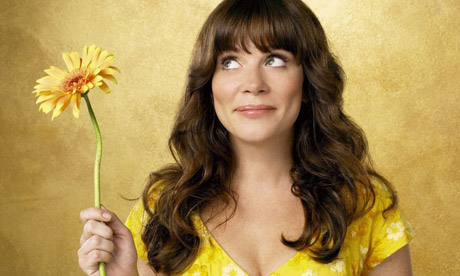
Pushing Daisies (2007; ABC)
However, even after the unfortunate passing of Wonderfalls, Fuller was not deterred.  In 2007, Pushing Daisies premiered, this time on ABC.  This was a strange show.  It was honestly unlike anything else on television.  It had this whimsical tone, filled with wide-angle lenses, Douglas Adams-esque narration, odd undertones of death and sex and the occasional musical number, all set to a super-polished Americana theme peppered with very bright colors.  The series followed the Piemaker, Ned, who discovered as a boy that he had the power to bring the dead back to life with a touch, but only for a few seconds.  He learned tragically that if he did not touch the resurrected again, something (or someone) nearby will die in their stead.  So naturally, as an adult, an intrepid P.I. is there to exploit his powers to talk to the dead to solve mysteries.  Nope.  Not kidding.  They go on adventures and everything, and as funny as that sounds, there is a strong sense of tragedy surrounding the entire show.  His best friend, the love of his life, and one of his few true friends dies and his choice to raise her from the dead for good leads to more than a few complications.  Aside from someone else dying for her to live, there is the sad reality that he can never touch her.  There is a heartbreaking poetry in this idea, and it is presented nearly flawlessly in Pushing Daisies.  Also, like much of his work to this point, this series revolved heavily around death.  

Pushing Daisies is, by-far, Fuller’s most successful series.  It lasted two seasons but, unlike his previous shows that ended far too soon, I think it was enough.  It ran its course, plots were addressed and resolved and any more would have just been turning the wheels.  Instead of keeping this alive, Fuller and ABC did the right thing and touched it a second time, to put it down for good.  Yet, during its run, it won numerous awards and was nominated multiple times.  Lee Pace and Chi McBride were both great as always, but the show-stealer here was the then-mostly-unknown Kristin Chenoweth (unknown, at least, outside of the theatre scene).  At the time of the show’s production, Chenoweth was already a beloved Broadway star and it shows in her performance.  Her energy and vocal talents take over, especially in the second season, where she goes from being a supporting character to a more driving force in the overarching story.  Every show has the one character that people remember the most coming out, and for me, Chenoweth’s Olive WAS this show.

http://thefilmtransition.com/wp-content/uploads/2014/02/Mads-Mikkelsen-as-Hannibal.jpg
This brings us to today.  Bryan Fuller’s current notable project is the series Hannibal, a prequel to The Silence of the Lambs in which we see a younger Hannibal Lecter in his prime.  I’ve watched the first few episodes of the series myself and I… didn’t really like it.  Not to say that it was bad by any stretch.  It certainly stands out in terms of quality compared to most shows on network television today, but I think knowing it was Fuller’s work going in left me a little jarred.  It is so unlike his other efforts as to be sort of off-putting for me as a long-time fan.  I wanted there to be a hint of the charm found in his previous works, but what I saw of Hannibal is far too serious.  Now, I plan to go back and rewatch the first season, just so as not to dismiss it entirely because I may have missed something.  I want to like Hannibal, I really do, but I will require a lot of convincing.  

So, you have a talented young writer/producer who is notable for working on a few of the most criminally short-lived television series of all time.  This is a running theme, largely because TV executives are forced to look at short-term gain through ratings rather than long-term popularity.  It also doesn’t help that most of these shows were shoved into the fray against insurmountable odds.  Still, they have their fans; and justifiably-so.  Bryan Fuller is a tremendous talent and I as his career progresses on, I foresee him having a long string of successes and fan favorites.  His vision and style is just unlike anyone else in the industry today, despite a few imitators.  If you have not seen any of the series listed in this article, I strongly recommend checking them out, they are all good in their own distinct ways and have much wider appeal than their short runs might have you believe.

Thursday, March 5, 2015

TV Pilot (Heaven!) - Northern Exposure (1992)

http://files.abovetopsecret.com/files/img/fs5340b694.jpg
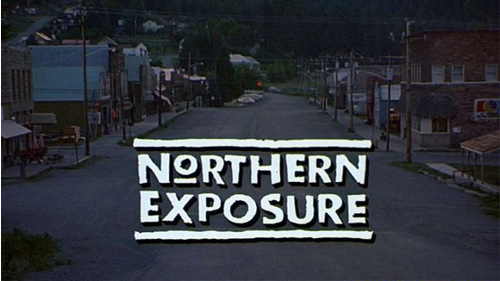
Northern Exposure (1990-1995; CBS)

Creators: Joshua Brand and Joe Falsey
Starring: Rob Morrow, Barry Corbin, Janie Turner

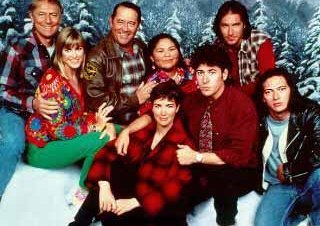
When I was a kid, there was a lot of hype surrounding Northern Exposure.  It aired as a mid-season replacement on CBS in the Summer of 1990.  After CBS’s 10pm timeslot opened up with that Spring’s finale of the beloved Newhart and the failure of The Dave Thomas Comedy Show, this little series came out of nowhere and become a winning and beloved titan in the eyes of millions.  

http://images2.fanpop.com/images/quiz/202000/202869_1241310853339_320_226.jpgRob Morrow plays Joel Fleischman, a New York doctor who is given an opportunity to work in lovely Anchorage, Alaska, but his big greeting to the city hospital does not go as planned.  He is informed his position was full and was redirected to the small, fictional town of Cicely, Alaska where he is greeted by a shrewd former astronaut who is consumed by his desire to turn his small hole-in-the-wall town into a booming resort.  Trapped in this strange place due to a legal contract, the breaking of which could result in a prison sentence, Joel opens a small practice with only the help of the awkward Marilyn.  Joel interacts with the locals, including a tomboyish pilot and a friendly young leather-clad bro-dude, and it all seems he has to make the best of it while he waits for his wife (who is still in the big city) to finally arrive in town.

Northern Exposure had a lot going for it; a funny premise, a smart and talented cast and a great team of writers, but the show had a troubled history behind the scenes.  After the first few seasons were extremely successful, CBS inexplicably cut the show mid-season to air new test programming during Sweeps.  This killed any momentum the show had for that running season.  Other issues, including actors demanding more pay and a failed list of new characters being introduced drive viewers away, resulting the in the show’s ultimate cancellation.  A lot of this could be traced back to some of its stars (Morrow in-particular), moving into film.  Morrow landed a major role in the critical darling Quiz Show, and as a result he began to seek either more compensation from CBS, or better film roles.  Sadly, his film career never really took off.  He’s a charismatic performer, good looking and was adaptable, able to play different types of characters, but ultimately his career landed him back in TV on the quality crime thriller Numb3rs after a decade of movie flops.

https://blogger.googleusercontent.com/img/b/R29vZ2xl/AVvXsEj3585wxUWFhaiECEFRV3zmRDylpkFYVGtWJrJhg_GBOFA33Fi-fVRDDWPo6O5bCs1-cXOdqgj_9DXhBoLsvNFuhCjmrmyYZZQO1ezLvcLwv9Ob_kbFRKfTP62RIyg4PDOkWBzwOqDAAmk/s1600/DSC_0096.jpg
This is an example of how a very simple premise, a likeable cast and a smart team of writers can create something special under very strenuous circumstances.  A midseason replacement always has a few things going against it.  First, it moves in to fill a time slot for a show that people just did not watch.  Reason then dictates they were watching something else.  DVR was not a thing, and while you could record a different channel on the VCR at the same time, it was still a toss-up battling two other networks’ existing programming (Fox did not have a slot past 10pm).  Secondly, there is the risk of the network experimenting with other new programming for the Fall season.  This is what happened in Northern Exposure in its last year, with CBS breaking the season up to test other new shows in its slot.  The final major obstacle for this series was the fact that it ran on Monday nights, meaning for several months out of the year it was competing with ABC’s Monday Night Football.  

All-in-all, Northern Exposure tenaciously triumphed over great adversity thanks to a devoted fanbase and the chops that come from being a multi-year Emmy and Golden Globe nominee.  The final season’s cast and crew changes did it in, but that happens all of the time with TV, and the fact that this show lasted for four seasons is quite the accomplishment because most shows do not make it that far, even some really good ones.  It’s a funny, well-written show with a lot of warmth (in spite of the climate) and lastly, I’m willing to bet the mooseburger is actually quite delicious.

Wednesday, March 4, 2015

"Know" More Pop-Culture - What Happened With 'Turn-On'?

http://fm.cnbc.com/applications/cnbc.com/resources/img/editorial/2011/08/23/40611179-SS_16_major_tv_show_failures_turnon.jpg
Turn-On's TV Title Card (ABC Television; 1969)
In February of 1969, a notorious TV pilot would air that would shock many and become notorious as one of the biggest television disasters in history.  I mean, the events of that fateful night make the trainwreck that was Joanie Loves Chachi look like Cheers by comparison.  So, what happened?

ABC led up to Turn-On with a lot of promotional hype.  It was the brainchild of the previous year’s big hit Rowan & Martin’s Laugh-In’s executive producer George Schlatter, and the network was ready to set it up for a full twelve-episode first season before the pilot even aired.  Turn-On premiered on February 5th, 1969 at the 8:30pm time slot.  All seemed innocuous enough on the surface and with popular McHale’s Navy-star Tim Conway guest-hosting, people tuned in to see what ABC had been selling them for months.

http://badassdigest.com/_uploads/images/to.jpg
Turn-On Promo;
TV Guide Clipping
Reactions to the show were immediate and visceral.  The Cleveland, OH ABC affiliate refused to continue airing the show after the first commercial break and Denver’s local producers refused to air the show at all after the network screening.  The show was described as “crass” and “blue”, bombarding the sensitive 1969 American audience with fast and not-so-subtle sex jokes.  A second episode was recorded in full, but was never released, with only a few very brief scenes clipped in as part of a documentary for BBC Channel-4 in the UK.  It is incredibly difficult to find footage of this show, but the few scenes I have seen indicate this show’s cancellation was not a tragic loss by any stretch.

Most of the show had slapdash sketches and quick stingers filmed in front of a blank white stage backdrop.  There would be props and some set dressing for certain sketches, but it was all actually pretty plain.  This was likely an artistic choice as the very funny piece of TV psychedelia that was Laugh-In came from the same producers and it had more quality in its production design.  Some complained that the show was unwatchable due to the hyper-kinetic editing which, mixed with the white background, reportedly caused some viewers to become “physically ill”, though, I do not know how true this actually is.  In reality, Turn-On was likely just too much for the audiences of its time.  The sex references and the very direct jabs at public figures like Richard M. Nixon really put people off of the show.  A number of affiliates issued complaints their local customers made, and the show was killed for good a few days after its debut.  

The notorious pilot didn’t do much for the cast, either.  The lovely Teresa Graves would go on to join Laugh-In that year, but only for one season.  She would then appear in a few blaxploitation films (most notably the Fred Williamson vehicle That Man Bolt) and would get her own short-lived show Get Christie Love! in the mid 70’s.  She then would retire from acting shortly thereafter and would focus primarily on philanthropy.  Tim Conway kept doing his thing, and remained successful in-spite of this disaster.  He later spoke about it, not really showing any regrets.  In-fact, he was in good spirits about it, but Conway was already a TV veteran by 1969, so he’d seen the worst come and go.

By most accounts, Turn-On was simply ahead of its time.  It was too much for the period in which it aired and it would be more than six years before SNL would piss off half the country in 1975, but it just did it a lot better.  A large factor that arguably led to the show’s abrupt end was that it just wasn’t that funny.  It was all edge and no wit.  Carol Burnett put TV comedy over the edge in the 60’s and 70’s but inspite of all of her controversies in her time, she was a well-loved and respected woman, but most of all she was just very, very talented.  Not to discount Tim Conway in any respect, but even his chops weren’t enough to keep Turn-On… Turned on… (Sorry I couldn’t resist… it was too easy)

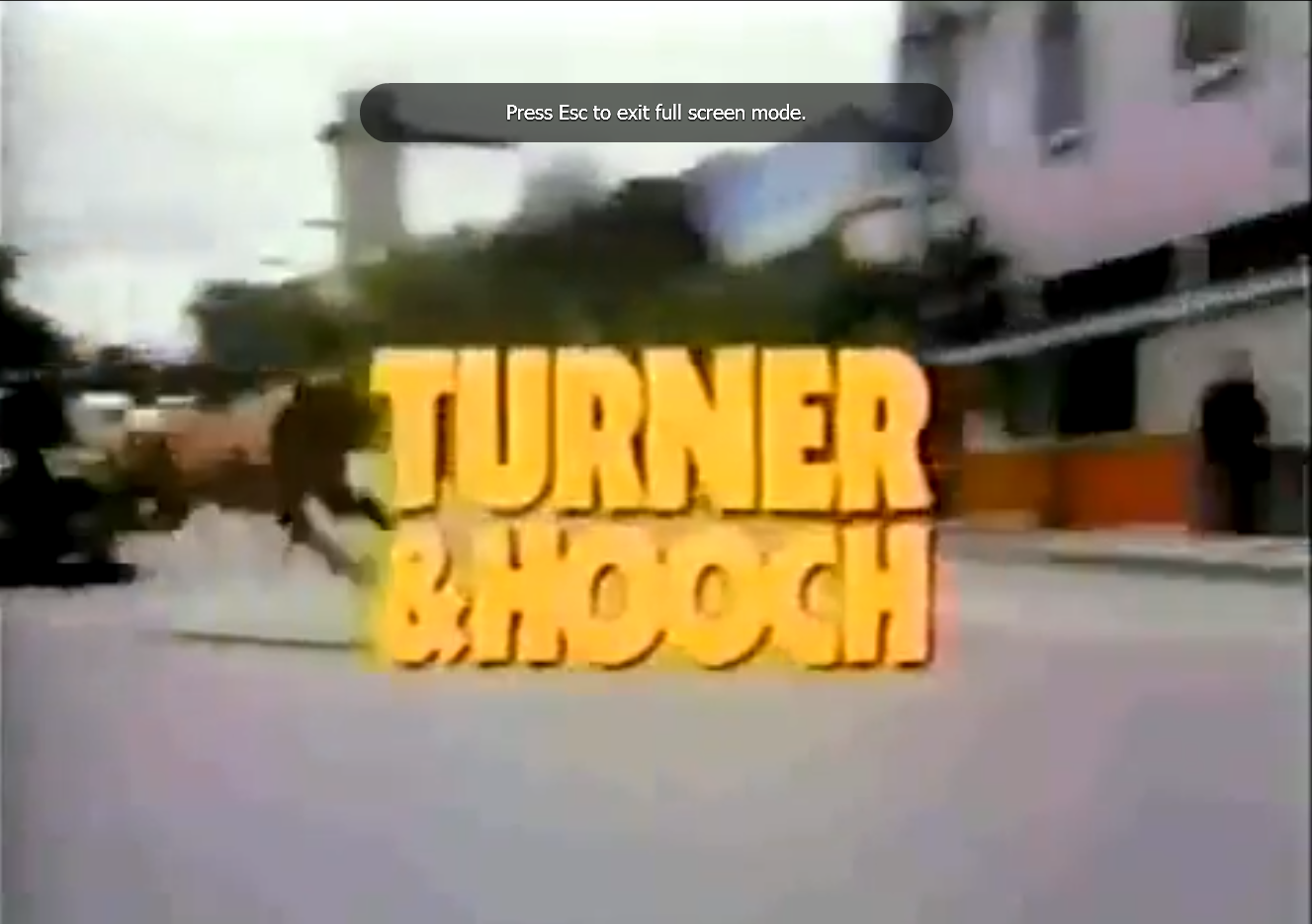
TV Pilot Hell - Turner & Hooch (1990)


The dreaded one-joke premise.  It’s a nearly guaranteed show-killer and here, we have an absolutely braindead TV sitcom based on a pretty bad police comedy.  Quality TV series based on movie franchises are extremely rare and this is an example of how to take a movie that was already pretty unfunny and drive its single joke right into the ground.  The first ten minutes of this TV series seems like an hour, and it doesn’t get any better.

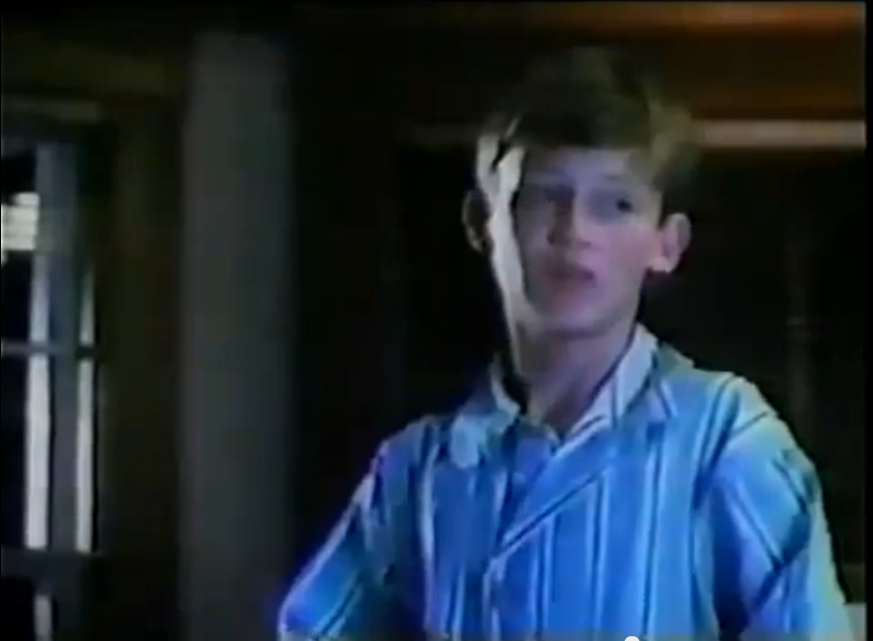
In 1990, Tom Hanks was already too hot a commodity to appear in low-grade crap like this, so instead we get B-list actor Thomas F. Wilson as Det. Scott Turner, who most probably remember best as Biff Tannen from the Back to the Future movies, or as Coach Fredricks from Freaks & Geeks.  He’s not a bad performer when he’s playing off of better actors, but here he is just awful.  He is not leading-man-material, and he spends every scene struggling through his lines.  However, as much as I complain about Wilson’s performance, the supporting cast is far worse.  This film even goes so far as to add an obnoxious delinquent kid to the mix, making what is already a really lazy and dull comedy into something that is nothing short of unwatchable.  He is far, far worse than Kid from Dick Tracy, another legendarily bad child performance from around that time, and like Hooch, he has one character trait: He gets into trouble!  Oh… how zany…  To top it all off, this show ends with a pillow fight between the kid and Turner complete with period-appropriate sax solo and a freeze frame on Hooch.  I wish I were making this up…


The rest of the supporting cast includes Wendee Pratt as Mrs. Turner.  She had a few roles after this but is mostly known for her brief run on the soap opera One Life to Live.  The rest of the characters just show up then disappear, having no real effect on the show, existing only to set up the next scene.  Comic Relief Cop (his name is ‘Boney’... Because he’s fat..?) appears to tell Det. Turner what the next act of the show is and sends him on his way, and the show has a brief appearance by a lively chef who knows Turner, and I am assuming he is meant to be a recurring character but here he only exists to facilitate the introduction of that damn kid.


This show is written in cliches.  This is common in sitcoms, but here everything has been done over and over again and Turner & Hooch goes the extra mile by taking those cliches and just replaying them ad-nauseum during its 23 minute run.  The kid is a runaway thief who ends up in the care of the unwilling cop.  The wife is a goody-goody who wants to help the “misunderstood” kid, only existing in the entire show to make sure Turner is stuck with Hooch and an aggravating child actor (Det. Turner really needs to get a divorce).  There are no other cops of consequence and imagine my surprise when the titular cop wasn’t called in to get chewed out by his tightly-wound and heavily-caffeinated chief.

All of those complaints aside, the episode is just a mess.  Scenes bounce between each other so fast it is actually a little disorienting and I have a sinking feeling this was meant to be a one-hour block but was cut in half after producers saw the finished product.  I make that assumption based on the fact that it feels like chunks of the show are missing.  Character introductions are fast and short and never really establish any sort of relationship.  The marriage between Det. Turner and his wife feels more like the relationship between a homeowner and a maid.  The kid in the show is bad, sure, but he seems like he was born ready to wind up in the care of a cop, never showing any resistance or surprise about anything.  Ultimately, nothing comes together.  There are sections of the story that feel lost and there is zero, ZERO character development.  The only thing we get is Hooch running into things, knocking people over and simply just causing a ruckus so we can get a zany jazz solo followed by a soul-crushingly-bad reaction shot from Thomas Wilson, who acted like he just didn’t want to be there at all.

Turner & Hooch aired on NBC in the Summer of 1990.  A Summer premiere (especially pre-2000) is usually a bad sign anyway, but hoooo-boy!  1990 was a bad, BAAAAD year for television.  To give you an idea of how awful this year was, Turner & Hooch, as stillborn and bland as it is, is not the worst cop-with-a-dog comedy series of that Summer!  The problem with Turner & Hooch is it’s just boring and lazy.  Outside of some of the performances, there isn’t really anything painful about it, and I can honestly see myself forgetting this show even exists.  At least with famously bad shows like Small Wonder you remember why it was bad.  Less than an hour after sitting through this snore-fest I was only thinking about what I wanted for lunch.

Tuesday, February 17, 2015

My 40 Favorite Films of the 90's - 9 - Quiz Show (1994)

Quiz Show (1994; Hollywood Pictures)
Director: Robert Redford
Writer: Paul Attanasio based the book by Richard N. Goodwin
Starring: John Turturro, Ralph Fiennes, Rob Morrow, David Paymer, Hank Azaria

In November of 1959, wealthy heir and university professor Charles Van Doren approached a House Committee in Congress and confessed to his complicity in a series of deceptive acts involving the super-hit NBC trivia game show “Twenty-One”.  It was a long-brewing and highly televised controversy that brought to light the deception of Hollywood and the way the entertainment industry is more than willing to deceive millions for ratings, a fact we simply take for granted these days.  The controversy began when a former superstar contestant, Herb Stempel, confessed to investigators at the House Committee on Legislative Oversight that he was asked by the popular show’s producers to lose to Van Doren.  In retaliation, he began to pursue aggressive legal action and took steps to expose the deception, not necessarily out of the desire to bring the show’s practices to light, rather it was to do harm to those he felt wronged him, Van Doren in-particular.  Envy and bitterness consumed him.

All of this actually happened, and has gone down as one of the most infamous controversies in Hollywood history, and it was all chronicled masterfully in Richard N. Goodwin’s captivating examination.  In spite of the book’s success at the time, by 1994, most of America had forgotten about the events surrounding Twenty-One, with nearly forty years of powerful events separating and drowning out this seemingly-”trivial” (pardon the pun) federal case.  Leave it to The Sundance Kid and an unknown screenwriter to bring the events to life for a whole new generation in the most fascinating form imaginable.  

Quiz Show is a masterwork of procedural storytelling.  As the events play out, it all feels too real.  The performances are outstanding, bringing these long-forgotten individuals back to life.  John Turturro, still in his prime, and Ralph Fiennes masterfully recreate the show’s embattled contestants, B-list actor Rob Morrow’s performance as a House Investigator ties the story together, and Paymer and Azaria’s sleezy producers are detestable to the extent that you can’t look away.  There is not a boring moment in this movie.  In spite of a seemingly-dull premise, Quiz Show is a gripping portal into the lives and mentalities of a few TV semi-celebrities whose legacies would be forever tainted by their decisions to embrace greed and fame over their own intellectual integrity.

Tuesday, August 27, 2013

Worst Actors - Robin Williams

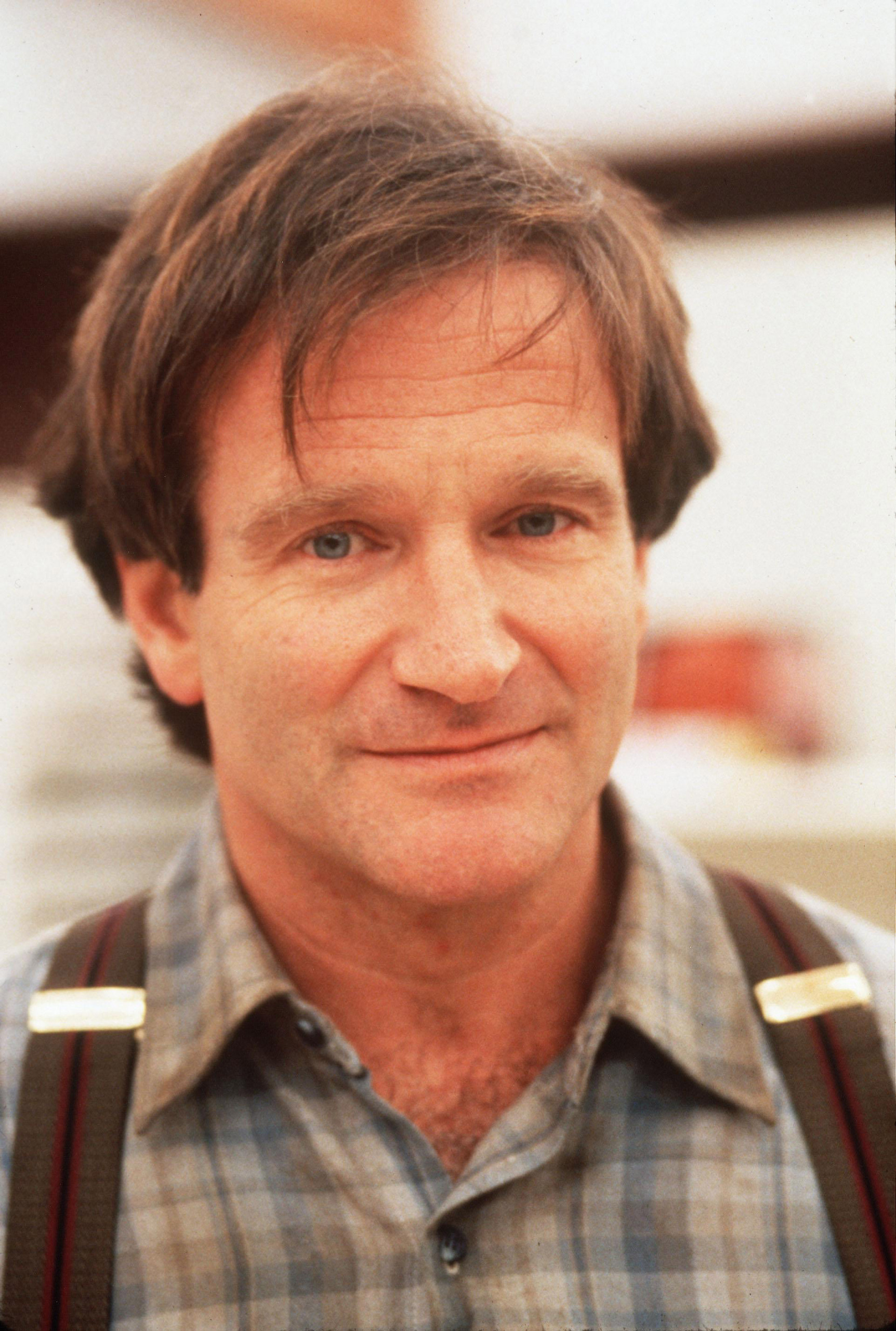
Mid-90's Williams; source:fanpop.com
So what does it mean to be one of the best actors among a slew of terrible A-list performers?  Well, I will give Robin Williams credit.  He does have some good performances under his belt.  The Dead Poets Society, Awakenings and Good Will Hunting are all good movies, and he was good in them.  However, when Robin Williams is not kept under control, and is given even a pittance of creative freedom, he can send a movie right off of the rails.  Williams’ manic and spastic behavior is common knowledge and part of his persona, and his notoriously embarrassing TV interviews in 1980’s and 90’s are the stuff of legend.  Robin Williams is, when kept under close control, able to perform, but his typical acting style is more like that of a nine year old cocaine addict with Tourette syndrome.  This was evident early on during his run on Mork & Mindy, a popular TV sitcom in which he performs alongside a subdued and underacting (bad acting) Pam Dawber, which makes him seem even more off-kilter and crazed.  


The performer he was most directly compared to for several years was that of Andy Kaufman, a comic talent who specialized in never really keeping the audience in on the joke, and who was actually quite brilliant in his ability to be deceptively entertaining.  Kaufman and Williams were both notable for playing comparatively crazy characters around the same time, but while Kaufman’s character on Taxi was reserved for supporting scenes and generally kept on a short leash, Williams was generally let loose on the set.  The same went for the total disaster that was Popeye.  A musical mess that should not of happened, was destined to fail from conception, and has become one of the most notably awful and costly bombs in film history.  


Through the 80’s, Williams appeared in one failure after another, from Club Paradise to Moscow on the Hudson, Williams once-promising career was beginning to look like a terrible mistake.  Then in 1989, he appeared in Dead Poet’s Society, an okay Oscar-bait film, one for which the Academy took said bait.  Dead Poet’s Society’s director, the sporadically-working, but consistently-good Peter Weir has a knack for squeezing surprisingly high-quality performances out of otherwise mediocre actors and, for some reason, this movie pushed Williams back into the public consciousness after a much-deserved career decline.  Then came the 90’s.  


The 90’s were a strange roller coaster for Williams.  The 1990 comedy Cadillac Man was a return to form for Williams, and despite his occasional attempt at drama, Williams maintained a steady career push in comedy.  1992’s Aladdin, released at the height of the Disney Renaissance was undeniably a turning point in his career as this performance’s success led him down a path towards slapsticky tripe, and the success of Hook the previous year had provided what would become the Williams formula for much of the 90's, schticky comedy slathered with heavy-handed family-focused schmaltz.  Mrs. Doubtfire, Patch Adams, Toys, Jack, and Flubber are all prime examples of the Williams formula at its worst, and, once again, by the late 90’s his career was in decline despite a few mid-decade successes such as Jumanji and the Birdcage.  Then, in a case of history repeating itself, Williams struck gold again with the critical success of Good Will Hunting, a good movie with a couple of good performances that rode the wave of a truly awful film year in 1997. This would be the last seriously-good role in Williams’ career.  


Since the late 90’s, It has been one epic disaster after another, with the occasional drama mixed in as if to shout “HEY!!! SEE!!?!?  I’M STILL AN ACTOR!!!”, but it really has not been enough.  He has not struck gold since Good Will Hunting and, despite a few Oscar-bait flops like the heinous Jakob the Liar and the disgustingly self-indulgent and grotesque World’s Greatest Dad, Williams has maintained a safe spot in the A-list.  The lame and squandered Night at the Museum movies as well as a few steaming piles like RV and Grown Ups will be Williams’ legacy.  

So, why is he on this list?  One of the principal factors I am taking into consideration is the disparity between the best and worst performances of an actor.  Williams has proven he has chops and can carry a good movie, however he puts way too much stock in his manic comic performances and has an uncanny ability to pick the worst screenplays bouncing between major producers and studios.  For this alone, Williams deserves to be recognized as a lost cause in major cinema.

Thursday, July 19, 2012

Our Top 40 Favorite Anime Openings - 20 - 16

Cartoon by Christopher McElfresh


20 - Happy Lesson (OVA)
"C"

Hikari Okamoto
Thundering music stings and crazy-looking characters are prologue to a poppy, squeaky, almost choral J-Pop anthem to a show that is both insane and endearing.  We see our lead character Chitose constantly abused (mostly accidentally) by his overbearing but well-meaning teachers all while the perky song bounces in the background.  Happy Lessons’ intros tend to show all of the story characters in flashes and stances, sometimes so frantically that if you don’t know who to look for, you just might miss them.  This is a fun intro, but hardly ranks among my all-time favorites.  Still, it rated high between us, so somebody loves it.
-Chris

NOTE: I was having trouble finding a copy of the opening I could embed, I embedded the song instead. The original intro (low quality) can be found here.


19 - The Melancholy of Haruhi Suzumiya
"Boken Desho Desho? (It's an Adventure Right, Right?)"
Aya Hirano
For a show about a girl who has no time for “normal human beings”, this intro is pretty pedestrian stuff.  That said, I cannot think of a better way to present this show.  It starts with the title character approaching school, where she then becomes the very center of everything, a position she asserts herself to in the show.  Running through a tunnel of stars, she is orbited and surrounded by friends and acquaintances.  The biggest strength of the intro is just how well the animation flows with the song.  The rhythm is almost seamless.
-Chris


18 - Baka to Test to Shoukanjuu
"Perfect Area Complete!"
Natsuko Aso
This intro is another one of those that shows a lot of bare backdrops, introducing characters one at a time.  This show, about a school of magic users that comes under siege by its underachievers through a series of challenges to their upperclassmen, is a little weird, and structured a lot like a video game.  This intro, though, is all anime, and is really only okay to me.  Though, I do kind of like the song okay.
-Chris


17 - Neon Genesis Evangelion
"Zankoku na Tenshi no Tēze (A Cruel Angel's Thesis)"
Neko Oikawa
The classic anime powerhouse lands at number 17 on our list.  I am honestly surprised it was so low, as it is considered by some to be the greatest anime opening of all time, however, I have to admit, it is not hard to see a little fandom in that assertion.  Still, this is a great intro, flowing with the music and full of original animations as the various characters are presented.  I do get a little tripped out by this intro though, considering what these characters go through throughout the course of the story.  The famous song, A Cruel Angel’s Thesis, has become somewhat of an anime anthem as Evangelion is considered one of the all-time greatest anime and ranks very, very high on my list of favorites.
-Chris


16 - Chobits
"Let Me Be With You"
Round Table feat. Nino
How do you introduce a show that overtly sexualizes an android?  With a romantic opening styled as a traditional television show credits scene, that’s how!  Chobits is one odd show but it also has some good-natured qualities that are present in this opening scene.  Despite the slight repetitiveness of the song, this is still one of the better intros out there and an obvious fan-favorite.
-Chris

Tuesday, July 17, 2012

Our Top 40 Favorite Anime Openings-  40-36
Cartoon by Christopher McElfresh

40 - Ghost Stories 7.5/10
Grow Up” by Hysteric Blue

Smartass kids make for good watchin’ and Ghost Stories is one of the better shows for this.  The intro is a childish chant of “Kimi no koto, watashi no koto” inviting a new experience for the kids we see in the presented during the opening credits.  The cutesy verse actually contrasts the grey and dark backgrounds we see through much of the opening animation.  This is a well compiled opening and has some nice imagery from the show.  Grow Up is an okay song, though it is a little annoying at times.  
-Chris


If you’ve ever wanted to watch a completely racist dub of a super serious ghost hunting anime, this is your choice right here. The opening was alright, but the core of this anime lies in the humor you’ll find in the english version of the dub. There are classics such as “The internet was a gift from the lord Jesus Christ to spread the word of God until it was taken by pedophiles and muslims”, or “Alright everyone, it’s 4:30. School is finally over. Time to go home, Load up that bong, and watch Pokemon!”

If you want to catch these and other racist, sexist, or any other type of -ist jokes, check out the link below, They make fun of everything, which is great. They don’t stop making jokes because its wrong, because free speech? It’s RIGHT.
-Craig

http://www.youtube.com/watch?v=ZX4mJn36fs4&feature=relmfu


39 - Star Ocean EX 7.51/10 Go to the Light”  by Amika Hattan

This is a solid intro for its animation.  The intro song is fun but the performer’s vocals are a little shaky.  The song could have benefitted from just a little more energy.  Still, I enjoy this opening for its composition and some of the background music.
-Chris


Star Ocean: First Departure For Sony Psp


38 - Samurai Champloo 7.75/10
"Battlecry" by Nujabes and Shing02

Feudal Edo-period Japan and hip-hop go together like butter and toast.  I would have never even considered this possibility until I saw Samurai Champloo.  The intro to Champloo is one with tremendous energy and style, mixing Takeshi Koike’s fantastic artwork, Kazuto Nakazawa’s legendary character design and animation and the new-world charm of an urban soundtrack.  While not as clever or captivating as the opening to Cowboy Bebop, this is one fun intro to watch, and it’s pretty to boot.
-Chris


This is one that I voted really high. Originally made by the same guys who made bebop, the opening tells you everything that you need to know about the characters, the setting, and even the personalities of said characters. You can tell that Fuu is a bit seductive, and clumsy. You can tell that Gene is a traditional samurai in his swordplay. You can see that Mugen is very unorthodox in the same way. You can tell that the story takes place in feudal japan. And this is all done wordlessly. The song has absolutely nothing to do with what’s actually going on here.
-Craig


37 - Bubblegum Crisis: Tokyo 2040 7.75/10
"Y'know" by Yu Asakawa

This is a hyperactive, kinetic intro for a great anime.  The song, however, is not one of my favorites.  I do love how the characters are introduced, however.  That said, this is a pretty pedestrian intro for a show that should be presented gloriously and, sincerely, I don’t believe it does this awesome anime justice.
-Chris


I agree with Chris on this one completely. The content of the anime dwarfs the intro to a large degree. The song is par for the course, and the intro does a good job of providing insight towards exactly what you’ll see in the anime.. to a lesser degree.
-Craig


36 - Last Exile 7.81/10
"Cloud Age Symphony" by Shuntaro Okino

This opening is very, very pretty.  Very pretty.  The art for Last Exile is just stunning throughout, but in the opening you get a nice taste of how this show really looks.  It is well-composed, laying out what is to be a very complex story of war and politics in the endless skies but in a way that is dramatic and adventurous.  The song mixes everything from a mouth harp to a bagpipe to lead into its techno-beat roaring anthem.  It is definitely one of the more musically-creative opening themes and it really paints a good picture of what is to come.
-Chris

Monday, July 16, 2012

TV Pilot Hell - Perception (2012)

Cartoon by Christopher McElfresh
Whoa, boy! The worst thing about what I'm about to say is that it probably will not mean anything. So, just consider this the rantings of an angry pop-culture geek over a stupid, pointless, copy/paste show that was laughable from start to finish. There are a lot of shows that are essentially amalgamations of other popular shows designed to cash in on those titles' successes. The problem with this lame wannabes is that they never, EVER seem to hold up. Judging by the pilot, Perception just may be the single worst offender in this category I've seen since Rizzoli and Isles.

Perception follows a neurology professor named Daniel Pierce who suffers from schizophrenia and often holds two-sided conversations with hallucinations, oh yeah, and he solves crimes! You see, Pierce is a human lie detector. He can instantaneously tell if someone is not telling the truth because of the inflection in their voice. So he is given a babysitter in the form of a sexy female agent (boy, does THAT sound familiar?) and they team up to track down the person responsible for a murder a pharmaceutical company.

The plot of this episode is pretty paint-by-numbers so I'm not going to dig too deep into it, but the overall plot of the show... I HAVE to talk about this. When the case begins, the doctor sees a hallucination who tells him things about his case. He constantly shows up when the plot needs him to point something out to the doctor (the audience) then disappears once the case is solved. Sort of like unlocking an achievement. It's a really, REALLY stupid plot device and it makes what was already a bad show even worse.

That one stupid plot element aside, this show as a whole is pretty dumb. It falls into the “Quirky or weird male crime solving genius babysat by a sexy female agent” sub-plot that's been around for years but has been at its worse lately with lame shows like Castle and the Mentalist. This show, however, is all about extremes. The male lead is EXTREMELY nuts and EXTREMELY annoying. While characters like Gregory House M.D. use one-liners, passive aggression and meanness to hide an actual character with emotion and conflict, this character's hidden trait is spelled out for us from the get-go and is about as predictable as one could imagine. This is the type of character concept that is played out in daytime soap operas, what makes any idiotic studio executive think it will hold water in prime time?

TV Pilot Hell - An Introduction

Cartoon by Christopher McElfresh

It seems to be par for the course these days. We get a heavily-promoted TV premiere and it just turns out to be derivative, boring or just bad. This is really bad from my perspective since I prefer well-written drama (or comedy/drama) and despise reality television and seeing how the latter is the only thing on anymore, I've more or less given up on TV. Still, I do check out many of the pilots as they air to see if there is anything else worth watching this coming season. So far, for 2012, the answer is a resounding “no”.

TV Pilot Hell is my journey through these dreadful pilots and an explanation of why they, and television as a whole, generally blows. So, I will open with a pilot that is still very new, and if you actually watched it, fairly fresh on your mind. TNT has become the home for drama (I guess...) and the occasional decent show, like Leverage, is cut between a stupid new reality show and a number of bad cookie-cutter cop shows. One such run-of-the-mill fail fest is Perception, a new show for 2012 that promises to be TNT's latest “quirky cop show”. Yeah, and I'm not a judgmental prick with too much time on my hands!