Chitika Ad

Showing posts with label 90s. Show all posts

Wednesday, March 4, 2015

TV Pilot Hell - Turner & Hooch (1990)


The dreaded one-joke premise.  It’s a nearly guaranteed show-killer and here, we have an absolutely braindead TV sitcom based on a pretty bad police comedy.  Quality TV series based on movie franchises are extremely rare and this is an example of how to take a movie that was already pretty unfunny and drive its single joke right into the ground.  The first ten minutes of this TV series seems like an hour, and it doesn’t get any better.

In 1990, Tom Hanks was already too hot a commodity to appear in low-grade crap like this, so instead we get B-list actor Thomas F. Wilson as Det. Scott Turner, who most probably remember best as Biff Tannen from the Back to the Future movies, or as Coach Fredricks from Freaks & Geeks.  He’s not a bad performer when he’s playing off of better actors, but here he is just awful.  He is not leading-man-material, and he spends every scene struggling through his lines.  However, as much as I complain about Wilson’s performance, the supporting cast is far worse.  This film even goes so far as to add an obnoxious delinquent kid to the mix, making what is already a really lazy and dull comedy into something that is nothing short of unwatchable.  He is far, far worse than Kid from Dick Tracy, another legendarily bad child performance from around that time, and like Hooch, he has one character trait: He gets into trouble!  Oh… how zany…  To top it all off, this show ends with a pillow fight between the kid and Turner complete with period-appropriate sax solo and a freeze frame on Hooch.  I wish I were making this up…


The rest of the supporting cast includes Wendee Pratt as Mrs. Turner.  She had a few roles after this but is mostly known for her brief run on the soap opera One Life to Live.  The rest of the characters just show up then disappear, having no real effect on the show, existing only to set up the next scene.  Comic Relief Cop (his name is ‘Boney’... Because he’s fat..?) appears to tell Det. Turner what the next act of the show is and sends him on his way, and the show has a brief appearance by a lively chef who knows Turner, and I am assuming he is meant to be a recurring character but here he only exists to facilitate the introduction of that damn kid.


This show is written in cliches.  This is common in sitcoms, but here everything has been done over and over again and Turner & Hooch goes the extra mile by taking those cliches and just replaying them ad-nauseum during its 23 minute run.  The kid is a runaway thief who ends up in the care of the unwilling cop.  The wife is a goody-goody who wants to help the “misunderstood” kid, only existing in the entire show to make sure Turner is stuck with Hooch and an aggravating child actor (Det. Turner really needs to get a divorce).  There are no other cops of consequence and imagine my surprise when the titular cop wasn’t called in to get chewed out by his tightly-wound and heavily-caffeinated chief.
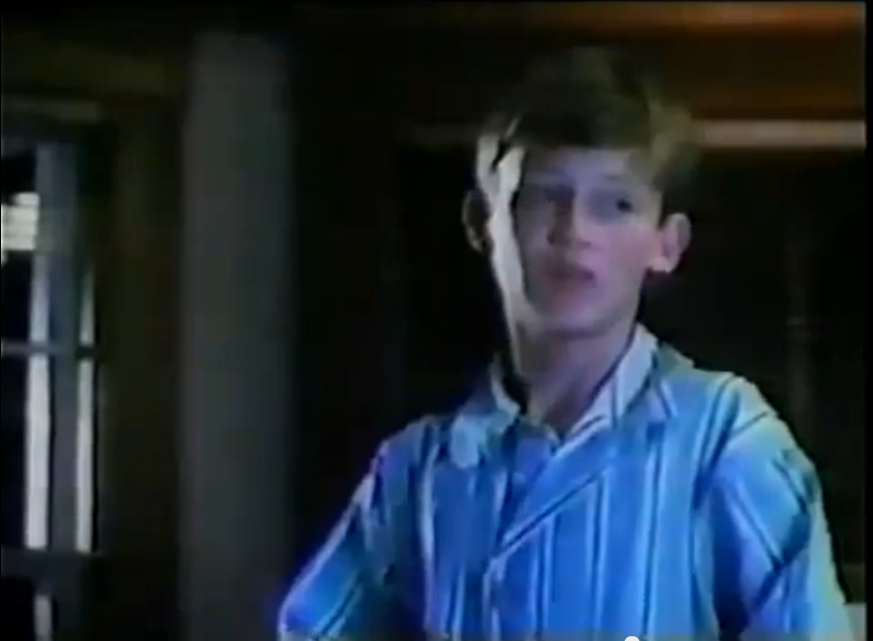
All of those complaints aside, the episode is just a mess.  Scenes bounce between each other so fast it is actually a little disorienting and I have a sinking feeling this was meant to be a one-hour block but was cut in half after producers saw the finished product.  I make that assumption based on the fact that it feels like chunks of the show are missing.  Character introductions are fast and short and never really establish any sort of relationship.  The marriage between Det. Turner and his wife feels more like the relationship between a homeowner and a maid.  The kid in the show is bad, sure, but he seems like he was born ready to wind up in the care of a cop, never showing any resistance or surprise about anything.  Ultimately, nothing comes together.  There are sections of the story that feel lost and there is zero, ZERO character development.  The only thing we get is Hooch running into things, knocking people over and simply just causing a ruckus so we can get a zany jazz solo followed by a soul-crushingly-bad reaction shot from Thomas Wilson, who acted like he just didn’t want to be there at all.

Turner & Hooch aired on NBC in the Summer of 1990.  A Summer premiere (especially pre-2000) is usually a bad sign anyway, but hoooo-boy!  1990 was a bad, BAAAAD year for television.  To give you an idea of how awful this year was, Turner & Hooch, as stillborn and bland as it is, is not the worst cop-with-a-dog comedy series of that Summer!  The problem with Turner & Hooch is it’s just boring and lazy.  Outside of some of the performances, there isn’t really anything painful about it, and I can honestly see myself forgetting this show even exists.  At least with famously bad shows like Small Wonder you remember why it was bad.  Less than an hour after sitting through this snore-fest I was only thinking about what I wanted for lunch.

Tuesday, March 3, 2015

My 40 Favorite Films of the 90's - 1 - The Shawshank Redemption (1994)

The Shawshank Redemption (1994;
Castle Rock Entertainment)
Director: Frank Darabont
Writers: Frank Darabont screenplay adapted from the short story by Stephen King
Starring: Tim Robbins, Morgan Freeman, Bob Gunton, Clancy Brown

Here it is.  After all this time, all the delays, everything… I’m here.  The Shawshank Redemption is my favorite film of all time.  I have a few reasons for this.  First, this movie came out when I was still pretty young, and I saw it for the first time at thirteen (I think).  It changed the way I saw movies forever.  It was the first real drama that I ever fell in love with, and after seeing it I needed to see more.  I was inspired to seek out all the movies I had heard about but never saw because they weren’t action or comedy movies, and it opened up an entirely new world for me.  Aside from the very personal influence this had on me as a film fan, it is objectively a great, great movie.  It was nominated for numerous Oscars but did not take home any statuettes, but then again, it was the 1995 Academy Awards, where it was up against the likes of Forrest Gump, Quiz Show and Pulp Fiction.  That is some stiff, STIFF competition.

The film follows a banker named Andy Dufresne who is convicted of murdering his wife and her supposed lover and sentenced to life within the dreary stone walls of Shawshank Prison.  There he befriends a slick smuggler named Red who begins to guide him and help him adjust to the reality that faces him.  However, Andy refuses to embrace his fate, taking every opportunity to remind his fellow inmates that there is hope beyond the prison’s walls.  He enters the corrupt prison and changes the lives of everyone there by simply refusing to let go of hope.

The Shawshank Redemption is not slogged down by a lot of the typical cliches of modern dramas.  There is no forced romance, no comic relief, no big tense dramatic moments (at least not until the very, very end of the film) and no forced melodrama.  The movie is told over several years of Andy’s sentence until his ultimate and impossible escape.  He leaves behind hope to his friends and retribution to those who abused their power.

One can come up with any number of allegories that may fit the story of Shawshank, but I like it as a simple story of a man who changes everything.  I know deeper meaning can be found, but I prefer to see this film today the same as I did in my young age.  It means something to me.  It was a demarcation point in my life as a kid growing up in a period of excess, where I began to seek out something different than what was being sold to me.  It has had a tremendous impact on me because, to this day, I remember how this movie changed me, and I am always willing to find the next movie to forever alter the way I perceive popular culture.

My 40 Favorite Films of the 90's - 3 - Pulp Fiction (1994)

Director: Quentin Tarantino
Pulp Fiction (1994; Miramax)
Writer: Quentin Tarantino
Starring: Samuel L. Jackson, John Travolta, Uma Thurman, Ving Rhames, Bruce Willis, Harvey Keitel, Tim Roth, Amanda Plummer

I want to be clear here, and I do not think this is hyperbole: 1994 is one of the greatest years in the history of film.  SEVEN of my top 40 movies of the 90’s are just from 1994.  The American Film Institute released their updated list of 100 Greatest Movies in 2005, a list spanning a century of film, and there were four movies on their list from 1994.  In fact, Pulp Fiction isn’t even the last film on THIS list from that year!

Pulp Fiction is a series of interwoven stories of violence and debauchery and it is absolutely glorious.  There is no one scene that isn’t captivating.  It is a powerhouse of cool direction, a distinct and fresh look and tone, and most of all a stunning screenplay.  So, naturally, it didn’t win the Oscar in 1995, but I’ve already gone over how worthless the Academy Awards are so I won’t bother you with that again.  Instead, let’s talk about one of the greatest films of all time.

Before directing Pulp Fiction, Quentin Tarantino made a couple other genre films including the previously-reviewed Reservoir Dogs.  Tarantino draws heavy inspiration from the classic 42nd St. Grindhouses of the 60’s and 70’s.  These theaters were known for their release of unvetted indie films, often branding the exploitation label, that for the most part remained unrated and rarely saw any release outside of these theatres until the mid-to-late 80’s.  These are the theatres that brought us the great Blaxploitation classics like Shaft and Superfly, the two of which were rare examples of great movies leaving the Grindhouse and getting a wide release (largely thanks to their hit theme songs).  We also saw a lot of graphic horror from Italian directors like Lucio Fulci and Bruno Mattei who rarely saw any form of wide distribution, even in the video market, their films mostly remaining cult classics looming in the underground horror scene.

So, what does this have to do with Pulp Fiction?  Well, this is a movie that amalgamates ideas from the various genres of the time.  The title refers to “Pulp” a largely pejorative word used to describe entertainment that is considered low-quality but is widely popular.  The movie uses directorial styles, fashions and concepts that were common in the Grindhouses, but were rarely embraced by the mainstream film industry.  This is part of what makes Pulp Fiction such an amazing film, it is a beloved, winning classic that employs and draws its inspiration from films that were almost entirely marginalized.  It’s very acclaim and success is itself a commentary on the manufactured idea of “mainstream” entertainment.

Pulp Fiction’s plot is actually a series of interconnected storylines all wrapped around a handful of jobs and the daily lives of two hitmen, Julius and Vincent (Jackson and Travolta).  They exchange memorable banter as they travel around Los Angeles, from cleaning out an apartment of misguided college kids, to taking a local crime lord’s wife (Thurmond) out for a night on the town.  Between these wrapper plot lines, we get other stories revolving around a boxer on a rough deal and a couple of crazed robbers, and that really does only scratch the surface.

The fascinating thing about the film is how everything really comes together.  We see plotlines that are, at first, complete non sequiturs, but as the film goes on, harkening back to these scenes reveals a beautifully-woven series of smaller stories forming a greater whole.  In fact, I believe (and this is speculation) a large part of why this film is so beloved is how it uses these stories to paint an involving picture that encourages audiences to see how it all comes together, creating a sort of active viewing experience.  You mind is processing the stories individually, and when it all comes together it is like an ecstatic revelation.  

There isn’t a bad performance in this movie.  Not one.  This is very rare as even the best movies have a few throwaway acting choices, but Tarantino's meticulousness pays off here.  The cast is huge and everyone has a reason to be there.  This is all supported by the screenplay and, to be honest, if this were a top 40 based on writing alone, Pulp Fiction would be number one.  This is hands down one of the greatest screenplays of all time.  It’s fast, witty and the dialogue, even from the simplest scenes, is superb.  It’s funny and has a charm and character you just don’t see in most movies, this especially goes for Oscar movies, which actually trend on the boring side (and I say this as a film snob).

Monday, March 2, 2015

My 40 Favorite Films of the 90's - 4 - Goodfellas (1990)

Goodfellas (1990; Warner Bros.)
Director: Martin Scorsese
Writer: Nicholas Peleggi
Starring: Ray Liotta, Joe Pesci, Robert De Niro

Scorsese returns for his final film on my list.  Goodfellas is the astoundingly-told odyssee of a man’s rise through the ranks of a local crime family, and his ultimate fall.  Henry Hill (Liotta) grew up admiring the local gangs.  The mob guys were the ones with the fancy clothes, nice cars and most of all, the respect.  As he grew up, his ties to a local heavy-hitter named Jim Conway (De Niro) and his association with the violent and unpredictable Tommy (Pesci), drove him to climb the ranks in the Family, at his peak becoming a successful and respected leader.  All seems well, but as a shaky marriage crumbles, and addiction consumes his life, Hill’s legacy becomes a faded memory barely filling an otherwise hollow shell.

As I said in my article on Casino, Scorsese knows how to tell an epic character study that spans many years.  Goodfellas’ narrative is told from the perspective of a man who always loved what he had become, until finally we see what he becomes by the end of the story.  It seems like it may have even been glorifying the life of a gangster, until we see what happens to those who are deep inside.  It’s a hard-edge look at the lives of a few powerful guys and how everything can all so easily fall apart.

Liotta gives a career-defining performance here.  I’ve always liked him as an actor, but I have yet seen him recreate the excellence he showed here.  Scorsese can often bring the best out of his performers and Liotta seems like he was just right for this role.  Good looking, smart, fast, a strong commanding voice… everything he needed was there and he didn’t just take it and run, he owned it.  Every scene he is in is highlighted by a subtle acting style that reflects mood and tone so well that you feel sucked in.  Joe Pesci gives his most famous (and Oscar-winning) role here, notably in the classic “Am I funny to you?!” scene.  Lastly, De Niro gives one of his more understated performances here, never going too far into the extreme, rather finding a nice soft balance.  His emotional scenes are so good, and he has just enough presence to not be overshadowed while never feeling like he’s trying to steal the show, as De Niro is occasionally want to do.  

Goodfellas has gone down as one of the greatest films of all time, and like many movies that share this title, it was heavily snubbed by the tone-deaf Academy.  It received a number of nominations, but Liotta was snubbed his nomination shot, and the film lost the Best Picture nod to the absolutely dull Dances With Wolves, a film that only has a legacy of being the movie Avatar rips off.  1991’s awards have somewhat become notorious, and deservingly-so.  Have YOU heard of most of those movies?  Probably not.  Dances with Wolves, sure.  Awakenings was a good movie, yes.  However, Goodfellas’ Oscar-snub is just another mark on an already messy and unreliable record for The Academy Awards, with most of the more winning films going down as forgotten or mediocre pieces, while the movies that got the finger tend to be highly praised… I’m talking to YOU How Green Was My Valley?! (If you don’t know, look it up)

My 40 Favorite Films of the 90's - 5- Reservior Dogs (1992)

Director: Quentin Tarantino
Writer: Quentin Tarantino
Starring: Harvey Keitel, Michael Madsen, Steve Buscemi, Tim Roth, Chris Penn

Reservior Dogs (1992;  Miramax Pictures)
The heist film is a classic genre with a long proud tradition of quality films.  Going all the way back to the silent era, the crime caper has been seminal in the action/thriller genres.  In 1992, Quentin Tarantino brought us Reservoir Dogs, a heist movie where the heist is only part of the story.  The core of the movie involves the interactions between a group of thieves hired to work a job for a local boss.  In an empty warehouse, the tough crew awaits their chance to meet up with their contractor, and finally split to leave this botch-job behind them, but nothing is that simple.  The entire job is a mess from the start, and while all of the hired men claim to be professionals, these guys do not work well together for the most part.  It all culminates in a series of disasters, betrayals and surprises that just make this a fun sit.  

The quality of this film comes down to a few key points.  First off, you have Tarantino’s trademark fast, witty banter and it is top-notch here.  The often funny dialogue and perfectly distinct personalities of the characters makes this film flow smoothly.  For a flick that takes place almost entirely in a mostly-empty warehouse with only a few interactions at a time, Dogs really never feels slow or flat.  It comes down to the dialogue and execution.  Second is the way violence is used in the movie.  While all of Tarantino's films are violent, unlike Kill Bill, which revels in it's 70's exploitation ways, Reservior Dogs' bloodier scenes are disturbing and really nail home the personalities of the characters involved.

There are a few notably memorable scenes, too, arguably the most famous of which involves Madsen, duct tape, a straight razor and Stealer’s Wheel.  If you know the scene you know this movie.  If you haven’t seen this famous movie moment, do not just go watch the one scene.  Instead, seek out Reservior Dogs in full and watch it through.  It isn’t a long movie, but it is a fun quotable, delightfully-exploitative and gritty picture full of everything Tarantino does best, all presented with a snappy screenplay and a spot-on cast of great actors in their prime.

Friday, February 27, 2015

My 40 Favorite Films of the 90's - 6: The Silence of the Lambs (1991)

The Silence of the Lambs (1991; Orion Pictures)
Director: Jonathan Demme
Writer: Ted Nally adapted from the novel by Thomas Harris
Starring: Jodie Foster, Anthony Hopkins, Ted Levine

I gave a nod to one of Demme’s other great 90’s classics Philadelphia previously on this list.  While Philadelphia was an excellent film with a career-changing performance for its star Tom Hanks, it did lack one thing, a really good villain.  For that matter....  Why don’t we just have two?!

The Silence of the Lambs is the story of a young FBI academy member named Clarice Starling who finds herself entangled in an investigation into the disappearance of a girl.  Believed to be the work of a serial killer who calls himself “Buffalo Bill”, the very desperate federal agency forces the nervous yet bright young Starling to interview yet another, far worse, killer: the cannibalistic psychopath Hannibal Lecter.  The hope of which being she would be able to appeal to him for a profile to aid in the apprehension of Bill, and the rescue of the missing girl.  

In hindsight it’s easy to miss, but The Silence of the Lambs was a very important demarcation point in procedural filmmaking.  Most commonly, the perspectives in these sorts of movies were fixed.  We would see events from one character, or at least from one side of an investigation.  This is in the vein of the classics of Agatha Christie, who crafted her tales in such a way to keep the reader guessing and involved in the mystery.  The Silence of the Lambs takes things in a different direction.  Instead of being trapped on one side of the struggle, or even being a fly on the wall, the story is told from a rather omnipotent perspective.  We see Clarice being called in to work on the case, we see the creepy and famous scene of her walking to the end of the "dungeon" to find an unsettling image of Lecter waiting stiffly for her arrival, but then we see a girl trapped in a well, we see an insane man dressing in drag and dancing almost comically in front of a mirror, and we even get some perspective from Bill’s dog!  The goal here is to craft a story from all of the facts simultaneously, dropping them all in at once, and all the audience can do is hope and wait.  It answers the question of whether or not you would WANT to know what happened, even if everything did not turn out alright.  

This is a film built entirely on the performance of Hopkins as Lecter.  Aside from the standard serial killer plot that wraps the film, this character is the image and identity of this movie.  Even those who have never seen Silence of the Lambs, any of the other Hannibal Lecter movies (not recommended) or the recent TV show, likely knew who Lecter was by reputation.  He has become the standard by which movie villain performances are measured, and for good reason.  Hopkins’ Oscar-winning performance sold this movie.  The plot is actually quite ludacris, Buffalo Bill is insane in a rather comical way and much of the cinematography is flat, except for a few notable scenes.  No.  This is about Lecter.  Hopkins’ performance is so good in this movie, that not only is he the lynchpin here, but his portrayal of the mad doctor makes it nearly impossible to really enjoy any other cracks at the character from other performers, and for me this includes Mads Mikkelsen, who is good, but nowhere near this good. 

My 40 Favorite Films of the 90's - 7: Casino (1995)

Casino (1995; Universal Pictures)
Director: Martin Scorsese
Writer: Nicholas Pileggi
Starring: Robert De Niro, Joe Pesci, Sharon Stone

For anyone noticing a distressing lack of Scorsese on my list, here you go.  As the modern master of these long character epics, Scorsese has built his career on telling the tales of the underbelly of urban America.  Casino, his stab at Vegas greed and mob influence, is by far one of his best films.  I say this for a number of reasons, but most of all it comes down to how he reveals these characters to us.

Casino’s plot is somewhat hard to narrow down as it covers the lives of these characters over a time span measured in years.  It centers on powerful Casino boss ‘Ace’ Rothstein (De Niro), who, along with his partner Nicky Santoro (Pesci) manage a successful Vegas enterprise while dealing with conflict and facing down scammers and hand-shaking high rollers.  As the story goes on, Rothstein’s own past and ways, as well has his greed, slowly begins to catch up with him.

Casino isn’t as quotable as Taxi Driver or Goodfellas, but what it lacks in those films’ sharpness, it makes up for with a complex and layered plot that never seems to go too far off the rails, hanging on just enough to remain entertaining without becoming convoluted.  The film goes into technical and business aspects of a Vegas casino as well, some of which are creepy and some are just plain amazing.  Scorsese's’ direction is spot-on, too.  

Directorially, scenes flow together in a near-seamless fashion despite being often separated by months or years.  The narrative sort of moves in rhythm to the flow of the scenes, overlapping then resolving in a somewhat unconventional way.  Over time we see the disintegration of these characters, proving once-and-for-all that gambling is a dirty business, so who better to show us its dark side than the man who does it best?

Wednesday, February 18, 2015

My 40 Favorite Films of the 90's - 8 - Jackie Brown (1997)

Jackie Brown (1997; Miramax)
Director: Quentin Tarantino
Writer: Quentin Tarantino based on the novel by Elmore Leonard
Starring: Pam Grier, Robert Forster, Samuel L. Jackson, Robert De Niro,

Tarantino is a master at crafting complex stories with a large cast of characters and interweaving stories and in 1997, he would direct one of his best films.  Jackie Brown is both a throwback to 70’s Blaxploitation and the complex filmmaking styles of classic directors like Akira Kurosawa and Fritz Lang.

The interweaving plot follows a flight attendant named Jackie Brown who is drawn into a smuggling scam by a local weapons dealer and is then turned by a cop who becomes oddly enamoured with her.  Throughout the film, Jackie is constantly playing both sides (ala Yojimbo).  On one end, you have a tired, veteran cop who is sick of always doing the right thing.  Then, on the opposite side you have a disturbed arms dealer (Jackson) who is working out a sale to a sleazy thug (De Niro), whom Jackie is running money for by smuggling it through her flights.  Ultimately, the film focuses on a plan executed masterfully by the titular heroine to break out of the cycle in which she has found herself trapped.

Our lead character’s plan is reminiscent of Yojimbo, and the final act of Jackie Brown is a call back to another Kurosawa classic: Rashomon.  The scene is played out multiple times, once for each character’s perspective, until we have seen the big scam unfold from all angles.  Somehow, Tarantino reveals this over and over yet each time we see it we learn something new about what is happening.  This film is worth seeing just for the third act, which is a captivatingly-complex series of events.

Jackie Brown is a darkly comical and deeply intricate story filled with references to exploitation and b-cinema.  The film’s very title is a throwback to the 1974 film Foxy Brown, which also starred a lovely Pam Grier.  The mood, atmosphere and sudden moments of shocking violence seemingly out of the blue are distinctly “Tarantino” and this movie has one trait that is astonishingly rare: There is almost no exposition… at all.  Outside of the occasional reference to an association or what someone does, nothing is spelled out for the audience.  Rather, we see a very self-contained story play out as a visual narrative.  It is a great accomplishment in storytelling through film.

Tuesday, February 17, 2015

My 40 Favorite Films of the 90's - 9 - Quiz Show (1994)

Quiz Show (1994; Hollywood Pictures)
Director: Robert Redford
Writer: Paul Attanasio based the book by Richard N. Goodwin
Starring: John Turturro, Ralph Fiennes, Rob Morrow, David Paymer, Hank Azaria

In November of 1959, wealthy heir and university professor Charles Van Doren approached a House Committee in Congress and confessed to his complicity in a series of deceptive acts involving the super-hit NBC trivia game show “Twenty-One”.  It was a long-brewing and highly televised controversy that brought to light the deception of Hollywood and the way the entertainment industry is more than willing to deceive millions for ratings, a fact we simply take for granted these days.  The controversy began when a former superstar contestant, Herb Stempel, confessed to investigators at the House Committee on Legislative Oversight that he was asked by the popular show’s producers to lose to Van Doren.  In retaliation, he began to pursue aggressive legal action and took steps to expose the deception, not necessarily out of the desire to bring the show’s practices to light, rather it was to do harm to those he felt wronged him, Van Doren in-particular.  Envy and bitterness consumed him.

All of this actually happened, and has gone down as one of the most infamous controversies in Hollywood history, and it was all chronicled masterfully in Richard N. Goodwin’s captivating examination.  In spite of the book’s success at the time, by 1994, most of America had forgotten about the events surrounding Twenty-One, with nearly forty years of powerful events separating and drowning out this seemingly-”trivial” (pardon the pun) federal case.  Leave it to The Sundance Kid and an unknown screenwriter to bring the events to life for a whole new generation in the most fascinating form imaginable.  

Quiz Show is a masterwork of procedural storytelling.  As the events play out, it all feels too real.  The performances are outstanding, bringing these long-forgotten individuals back to life.  John Turturro, still in his prime, and Ralph Fiennes masterfully recreate the show’s embattled contestants, B-list actor Rob Morrow’s performance as a House Investigator ties the story together, and Paymer and Azaria’s sleezy producers are detestable to the extent that you can’t look away.  There is not a boring moment in this movie.  In spite of a seemingly-dull premise, Quiz Show is a gripping portal into the lives and mentalities of a few TV semi-celebrities whose legacies would be forever tainted by their decisions to embrace greed and fame over their own intellectual integrity.

Sunday, February 15, 2015

My 40 Favorite Films of the 90's - 10 - Clerks (1994)

Clerks (1994; Miramax)
Director: Kevin Smith
Writer: Kevin Smith
Starring: Brian O’Halloran, Jeff Anderson, Marilyn Ghigliotti, Jason Mewes, Kevin Smith

In the early months of 1994, a young independent filmmaker named Kevin Smith would release Clerks, a massively influential black and white Generation-X film centering on the employees of neighboring convenience and video stores.  The worn-down and entirely passive Dante struggles with his boss, his personal life, his distrust of just about everyone and a slew of bizarre and unstable customers.  Jay, on the other hand, is cynical, bitter and entirely disinterested in just about everything, especially his customers.

Clerks is a portrait of the early 90’s.  It captures the cynicism, the uncertainty and the narcissism of the young working class while reflecting a period in time where the music was great, the attitudes were bad and the film industry essentially abandoned the idea of a good comedy.  Keep in mind that, just months after the release of this excellent low-budget movie, Hollywood would release a $40-million disaster called North.  This film is one of my all-time most hated movies and it tanked; I mean, it bombed bad.  Clerks, with around a $350k budget, grossed just over $3 million (while never getting a wide release; only being shown on just over 50 screens) but not only was it better, but most people forgot about North before its home video release (everyone except me it seems) while Clerks spawned a massive cult following, an excellent animated series and a list of other films from the writing talent of Kevin Smith including the excellent Chasing Amy and the lesser (but still hilarious) Mallrats.  

Pinning down an overall plot for Clerks is hard.  The film is told in vignettes separated by title cards with simple titles reflecting the tone or theme of the preceding scene.  While the overarching but simple story of the day in the life of an employee forced to work on his day off plays out, there are a lot of subplots and character moments that range from the slightly eccentric to the absurdly mad.  Outside the Quick Stop are two more working men, dealers Jay and Silent Bob, creations of Smith who would become omnipresent supporting characters in almost all of his films.  Bob stands coolly while Jay dances hits on female pedestrians, and acts boorish to the point of being rather likable.  

There is not one scene in Clerks that isn’t funny.  What’s better is Clerks is not tied down by many of the tropes that so often handicap the comedy genre…  Smith was saving a lot of those for Clerks II.

My 40 Favorite Films of the 90's - 11 - The Sixth Sense (1999)

The Sixth Sense (1999; Hollywood Pictures)
Director: M. Night Shyamalan
Writer: M. Night Shyamalan
Starring: Bruce Willis, Haley Joel Osment, Toni Collette

I just do not get Shyamalan.  He had a great start.  Wide Awake was corny and sort of Hallmark-Channel-Original-ly, but it had a childlike outlook on ideas of religion, skepticism and mortality that was simultaneously tragic and charming.  After Wide Awake (which wasn’t his first film project, but still…), he created what rates high on most film fans’ list of the greatest films of the 90’s.  The Sixth Sense was an astounding accomplishment in filmmaking.  Forgetting the “trademark” Shyamalan Twist for a moment it was just a great film all around.  Osment left a huge impression on the audience here, with a performance so good that the audience’s fear reflected his own.  To add to that he was entirely sympathetic.  For many years, the tale of the child with supernatural connections has been handled with the kid either being enigmatic or creepy, or was simply sage like and wiser than just about any other character.  In a few cases, they were also “okay” with the presence of the supernatural, never understanding what the big deal is.  Cole (Osment) is terrified of just about everything, and it shows.  It permeates every scene.  He is always pensive entering a room, always looks down to avoid seeing anything scary, and almost never makes eye contact.  It’s subtle characterization you rarely see in modern movies.

The very simple story revolves around a child psychologist named Malcom Crowe (Willis) troubled by a case that went horribly wrong who meets his new patient Cole Sear.  Everything seems to be falling apart in Crowe’s life.  His wife is distant and nobody seems to care that he’s there, nobody except Cole, that is, who suffers from the baleful ability to see ghosts.  There is a strange connection between the two characters that is sudden and, at first, inexplicable.  As the story moves along, Cole is helped by Crowe to overcome his fear and begins to find meaning in what he once considered his curse.

There aren’t many movies like The Sixth Sense, at least not anything of quality released after 1980.  It is a straightforward story with few characters told well through great performances.  It has no villain, no pointless subplots, no focus on any characters except the two leads and their interactions with those around them and no freaking comic relief.  We have a story that reveals itself quickly but steadily, with almost no exposition, with all emotions conveyed through the actor’s faces.  There are actually scenes with little to no dialogue at all, where we just experience the world as Cole does.  It’s truly astonishing how well this tale is told.

So what happened?  Shyamalan has shown a steady decline in quality over the last decade and a half.  The subtlety and sincerity of The Sixth Sense is all but gone, with actors forcing emotion, over-or-underacting or being just plain silly.  It’s the curse of the great filmmaker, really.  If you release your Magnum Opus too soon, you will never be able to make another “good movie” again because all of the other films you release will be compared to the one that made your career.

Saturday, February 14, 2015

My 40 Faovirte Films of the 90's - 12 - The Usual Suspects (1995)

The Usual Suspects; 1995,
Polygram Filmed Entertainment
Director: Bryan Singer
Writer: Christopher McQuarrie
Starring: Gabriel Byrne, Benicio Del Toro, Kevin Pollak, Stephen Baldwin, Chazz Palminteri, Kevin Spacey

I’m not usually a huge fan of ensemble films.  They are often pretty bad.  To me they always harken back to the likes of North or the Ocean’s Eleven sequels (the first one wasn’t really all that bad).  The movies are selling themselves on their cast alone, with little effort in the actual script or direction.  There are always exceptions to this rule, however as we will see in a few entries.  That brings us to the Usual Suspects.  For audiences today, this is a major cast, but in the mid-90’s… Well, many of these guys were known but were not huge stars.  The biggest gets in this movie by far were Gabriel Byrne and Chazz Palminteri, who were already well-regarded and praised actors at the time and they sort of held the unofficial position of being the main draw for audiences.  This was also only the second feature directed by soon-to-be X-Men director, Bryan Singer.

The Usual Suspects just may be the best heist movie of all time.  If it isn’t THE best, it’s up there.  This movie has a great cast of characters you believe were career criminals.  They knew the drill and it showed.  They were cynical, untrusting and just aggressive as Hell to everyone, especially each other.  They were brought together to pull a major job as commissioned by the enigmatic Kaiser Sousse, a shadowy figure that is often the subject of thieves’ lore.  The entire movie is told in flashback as a mentally challenged man named Verbal (Spacey) conveys the tale of a heist gone really, really bad to the impatient Det. Kujan (Palminteri).  He tells the story of the characters, who they were, how they were brought together by the mysterious Sousse and how the job became a total disaster.  

This is a damn-smart movie.  The film scored an Oscar for McQuarrie’s clever, fast and naturalistic screenplay and he deserved it.  He was a regular collaborator with Bryan Singer in the 90’s but sort of fell off the earth for nearly a decade.  He’s made a comeback in recent years, though.  He wrote/co-wrote a few would-be Hollywood epics like the box-office bomb Valkyrie and another Tom Cruise-headed flop The Edge of Tomorrow.  This is sad because, judging by The Usual Suspects, he is a damn-good writer.  The foul-mouthed, quippy and aggressive screenplay to Suspects really highlights the ideas of the 90’s, which were influenced heavily by Spike Lee and Quentin Tarantino, and drew from the grim attitude and gritty action of police films of the 70’s and 80’s like The French Connection and Prince of the City.  These influences in the 90’s led to a pretty solid series of b-grade actioners and high-quality independent films like this one.  If you like action, heists and a brilliant script, you will like The Usual Suspects.

My 40 Favorite Films of the 90's - 13 - Being John Malkovich (1999)

Being John Malkovich; 1999, Gramercy Pictures
Director: Spike Jonze
Writers: Charlie Kaufman
Starring: John Malkovich, John Cusack, Cameron Diaz

I adore the occasional quirky, energetic and strangely eccentric film, and therefore I love Being John Malkovich.  It is directed by one of my favorite directors of the last twenty years, written by one of my favorite screenwriters of the last twenty years and co-stars John Malkovich, one of my favorite actors, period.  It’s a perfect collection of amazing performances, a strange and funny premise and a directorial style that fits perfectly.

The premise follows a lowly puppeteer named Craig (Cusack) who stumbles upon a hidden door in a strange office building that leads into the mind of another person.  He can see through their eyes and can even obtain a certain influence.  After a short time he discovers he is occupying the mind of none other than actor John Malkovich (as himself).  He introduces his wife to the experiment and they both become obsessed and rather rejuvenated by the power.

This movie is NOT for everybody.  It is very offbeat, written with that trademark “Kaufman” style and features the soft-spoken charm that is often associated with Jonze’s direction.  Many film fans like myself have been following Jonze very closely for years, and while many have HEARD of his movies, I don’t think he has really began capturing a mainstream audience until his recent film, the awesome Her, which he also wrote.  However, if you like strange, funny and somewhat twisted movies, this is an awesome find if you haven’t seen it.  

If I had to pick a favorite scene, those who saw it would remember the moment when Malkovich finds out that people are actually entering his mind (I will not disclose the explanation for this) and decides to take action.  The results are both hilarious and somewhat terrifying, especially if you put yourself in Malkovich’s shoes.  Check this one out as it really is a brilliantly-clever, albeit bizarre film creation.

Monday, July 21, 2014

My 40 Favorite Films of the 90's - 17 - Philadelphia (1993)

Philadelphia (1993; Tristar Pictures)
Director: Jonathan Demme
Writer: Ron Nyswaner
Starring: Tom Hanks, Denzel Washington, Jason Robards

I sat and thought carefully about how I would approach this film.  If you already know what Philadelphia is about, I’m sure one could understand how difficult this subject is, both on an emotional and (unfortunately) a political level.  That said…  Here we go:

By the late 80’s the AIDS scare was in full effect, with many people unsure how the disease operates, and despite educational material being out there, most people preferred to be afraid of the victim rather than the disease itself.  Much of this fear was founded in bigotry, as AIDS was originally considered an illness that only affected gay men.  Despite this being utterly untrue, the facts did not alter the stigma.  As we began to understand the disease HIV, and its progression into AIDS, things and attitudes began to change, but even by 1993, there was still a great deal of ignorance about the subject.

Philadelphia is the incredibly challenging and heartfelt story of an attorney named Andrew Beckett (Tom Hanks), a gay man who contracts the dreaded virus.  After his termination from his firm, which was claimed to be due to negligence, he concludes it was because of his own bosses’ ignorance and bigotry.  Beckett asks another attorney named Joe Miller to help him with his case, but is turned down as Miller is himself a homophobe.  Feeling alone and fearful, the young Beckett steadfastly begins to file his own case.  With support from his partner Miguel (Antonio Banderas) and his family, Beckett struggles with his future.  Ultimately, with guilt and empathy, Miller comes around and offers to represent the man.  This leads to a rough trial both in the courtroom and in the life of a horribly afflicted man.

Philadelphia is an emotional and complex exploration of the time and the fear and unfair prejudice surrounding the AIDS epidemic.  The associations of the characters reflect of a variety of feelings about the subject, discrimination and acceptance and the struggle of a man who becomes the center of a charged political melee.  Hanks won his first of two Academy Awards for his performance in this film, as only the third actor to be nominated for playing a gay character in a Hollywood film.  Philadelphia won other awards including a Golden Globe for best drama as well as a list other international statuettes.  

Philadelphia is a rough sit made even more emotional by its characters.  Tom Hanks gives an incredibly moving performance here.  In particular, during his scenes on the stand, which most likely netted him the Oscar win.  The years leading up to Philadelphia were marked with a few hits and a lot of misses for the now-lauded actor, who was mostly known for comedies.  Philadelphia was not Hanks’ first Oscar nomination as he was nominated for the 1988 classic Big, and he received critical acclaim for his performance in the touching drama Sleepless in Seattle.  However, despite his recognition before the release of Philadelphia, the film marked a turning point in Hanks’ career, where he began focusing on more dramatic performances almost exclusively, with a line of Oscar nominated movies after 1993.

Denzel Washington gives an excellent performance as well, strengthening his already established dramatic resume as an outsider’s point of relatability to the subject.  The ideas of others change as he changes from a bigoted man to one who befriends and begins to care about Beckett and his plight.  Washington was perfect for this role.  He has a strong voice, tremendous screen presence and has always been an excellent dramatic performer.  Here, however, I would argue he gives the best performance of his excellent career.  We see a transformation in Joe Miller through him, and throughout the movie, even when the character’s views are detestable, he has a charm that is instantly gripping, and as he warms to Beckett, we feel their bond growing.  The two actors have an admirable chemistry that works and paints a vivid picture of a man whose heart steadily changes over the course of the story.

These performances, along with just about every other aspect of the film, makes Philadelphia a must-watch classic.  It is one of the most celebrated films of the 90’s for good reason, it is a strong, heart-wrenching story told wonderfully through masterful performances.  Jonathan Demme, who won an Academy Award for his Oscar-sweeping 1992 film The Silence of the Lambs, was a perfect choice for this movie.  He uses an interesting device throughout the film showing us a number of scenes with actors appearing to break the fourth wall.  While this begins as a strange little idea that would likely take one out of the movie, instead, here it puts us in the shoes of the characters and as the film goes on, is used to show us the pain and fear of Andrew Beckett as he steadily deteriorates.  There is a love for these characters that we feel through Deme’s direction, which makes the movie that much more powerful.  When screenwriters and directors really care about the characters they are creating on screen, the viewer can certainly tell.  They feel like real people, and in Philadelphia, it is very, very easy to forget, from time to time, that despite the film being loosely based on a true story, is not real itself.  Philadelphia is easily one of the greatest, and most heartbreaking films ever made.

Monday, July 14, 2014

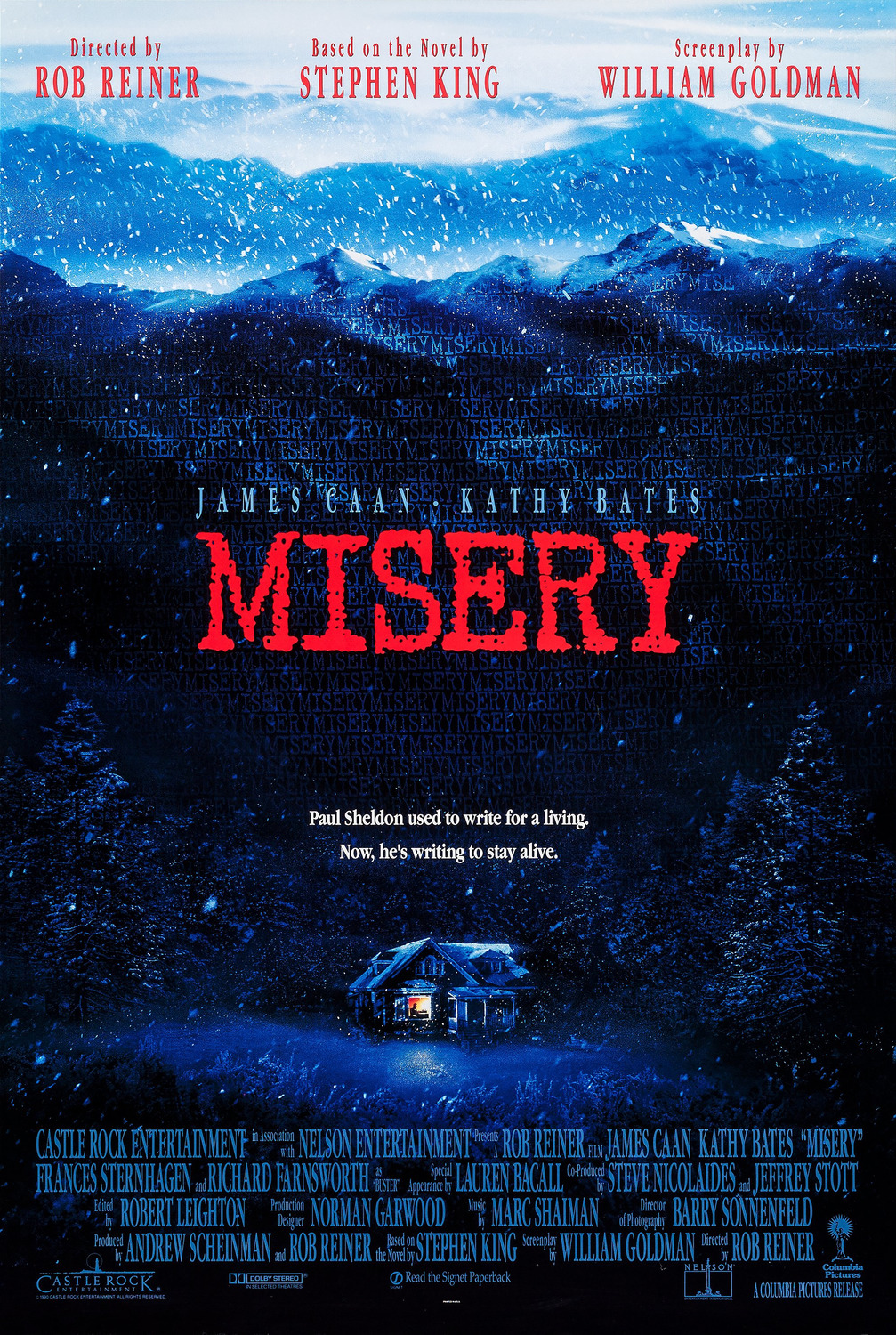
My 40 Favorite Films of the 90's - 24 - Misery (1990)

Misery (1990; Castle Rock Entertainment)
Director: Rob Reiner
Writers: Stephen King (Novel), William Goldman
Starring: James Caan, Kathy Bates


Rob Reiner used to direct good movies.  He does not do that anymore, and has had a rather bad track record since the mid 90’s, really starting with the dreadful bane of my existence that is North.  That said, during the 80’s and early 90’s he had a good run, and Misery is one of his best directorial works, lagging just behind the powerful A Few Good Men, the charming When Harry Met Sally and the fan-favorite fantasy The Princess Bride.  Reiner has a knack for visual style and Misery has a really cool idea behind it, focusing the camera mainly in a series of wide shots of a single room, putting the audience in the shoes of a man who is royally screwed, although, at least he is not the poor guy from Audition.


Misery follows the story of an author named Paul Sheldon.  After being injured in a car accident, Sheldon is nursed back to health by a woman named Annie who turns out to be a crazed fan.  Under her care, Sheldon is stuck in his present state, with nobody knowing where he is, and thus begins to finish the last novel of his beloved series in a bed in her cabin.  However, when Annie discovers his intent to kill off her favorite character, her already present insanity turns into utter rage, with events that build and tension that has a steady climb over the course of the film.

Misery is freaking terrifying.  It is not the lazy sort of horror with things jumping out at you shouting “BOO!”  No, this is a story where you are meant to empathize with Sheldon as an artist and a victim.  He cannot leave, he cannot fight her, he is almost entirely helpless through most of the film, and Annie knows it.  She has complete control over him, and as events play out, her attempts to keep him there to “fix” the story become more and more desperate, and violent, and a feeling of dread slowly fills the air over the course of the film.  It is a helpless situation that is elevated thanks to two very excellent performances from two superb talents.  Reiner’s direction goes a long way as well, with wide angle shots that appear as Sheldon’s perspective of the room, which has this strange effect of seeming smaller and smaller as the film goes on, and the low angle shots of Annie, stiffly towering over the severely injured man give a sense of intimidation very early in the movie, really before Annie even does anything all that crazy.  This is a creepy story executed flawlessly thanks to three talents in their prime.

Wednesday, May 14, 2014

My 40 Favorite Films of the 90's - 26 - Toy Story (1995)

Toy Story (1995; Walt Disney/Pixar Studios)
Director: John Lasseter
Writers: John Lasseter, Joe Ranft, Andrew Stanton, Joss Whedon, Joel Cohen, Alec Sokolov
Starring: Tom Hanks, Tim Allen

In July of 1928, Steamboat Willie became the first “talkie”, with a full spoken audio track playing over an animated short film.  It was a landmark achievement in filmmaking from an idealistic young director named Walt Disney.  A decade later, Snow White and the Seven Dwarfs became the first feature-length animated film and set the standard for the art of animation in its time.  Walt did much more for filmmaking than adapting classic fairy tales and building theme parks, though.  He designed and engineered the multiplane camera, allowing for the effect of perspective and depth in 2D animated films and was responsible for implementing many new forms of editing and effects that would revolutionize the way we look at the art of movies.

By the 70’s, however, Disney, as a company, was at an all-time low in terms of morale and success.  When Walt Disney died from cancer in 1966, the studio had a hard time keeping up the pace and begin producing fewer and fewer successes until the late 80’s saw the Disney Renaissance, a period of massive growth for Disney as a company.  In 1994, Disney gave us The Lion King, a massive achievement in filmmaking, and a year later, a small group of animators introduced the world to the first feature-length computer animated film: Toy Story.

Toy Story is an incredibly simple, timeless story told very, very well.  It follows the secret lives of toys when their owner, a boy named Andy, is not around.  They have a hierarchical ruling structure based on how much Andy loves them, with Woody (Voice of Tom Hanks), a pull-string talking cowboy, being the favorite and thus, the leader.  On Andy’s birthday he is given the next big toy, an electronic space hero named Buzz Lightyear.  Immediately Woody feels cast aside as Buzz appears to become Andy’s favorite new toy.  The only problem is, Buzz does not believe he is a toy, and thinks he is a real interstellar action hero.  Over time, Woody becomes so angry and envious of Buzz, that at one point he is accused by the other toys of killing Buzz when the space hero disappears.  This forces Woody to take action to find Buzz and prove his innocence, the two becoming friends in the process.  The film takes several turns in the story, with one surprisingly dark subplot involving a toy-torturing, truly messed-up kid who temporarily gains possession of Buzz and Woody.

Toy Story is a tale of unlikely friendship told through the a technology that was, at the time, still very new to general audiences.  Computer animation had been around for well over a decade but it was always very shallow-looking.  Bright colors and blocky figures dominated the artform, so imagine audiences’ collective surprise when Toy Story featured fully-animated characters in highly-detailed scenes.  It was a shock to most people, and it put Pixar near the top of the animation totem pole, right up there with Walt Disney Studios (a separate entity from Pixar) and Studio Ghibli.  The characters are interesting and relatable without being too cliched, the voice performances are all top-notch and art is still astounding by today’s standards, even after we spent years sitting through one mediocre CGI-fest after another, with the medium no longer being novel, just boring.  Toy Story is a reflection on a time when talented filmmakers were still very excited about a new art-form, and the potential of this new style of animation was still on the horizon.

NOTE: I would also point out that this was an early major screenwriting project for fan-favorite filmmaker Joss Whedon, so there's that, too!